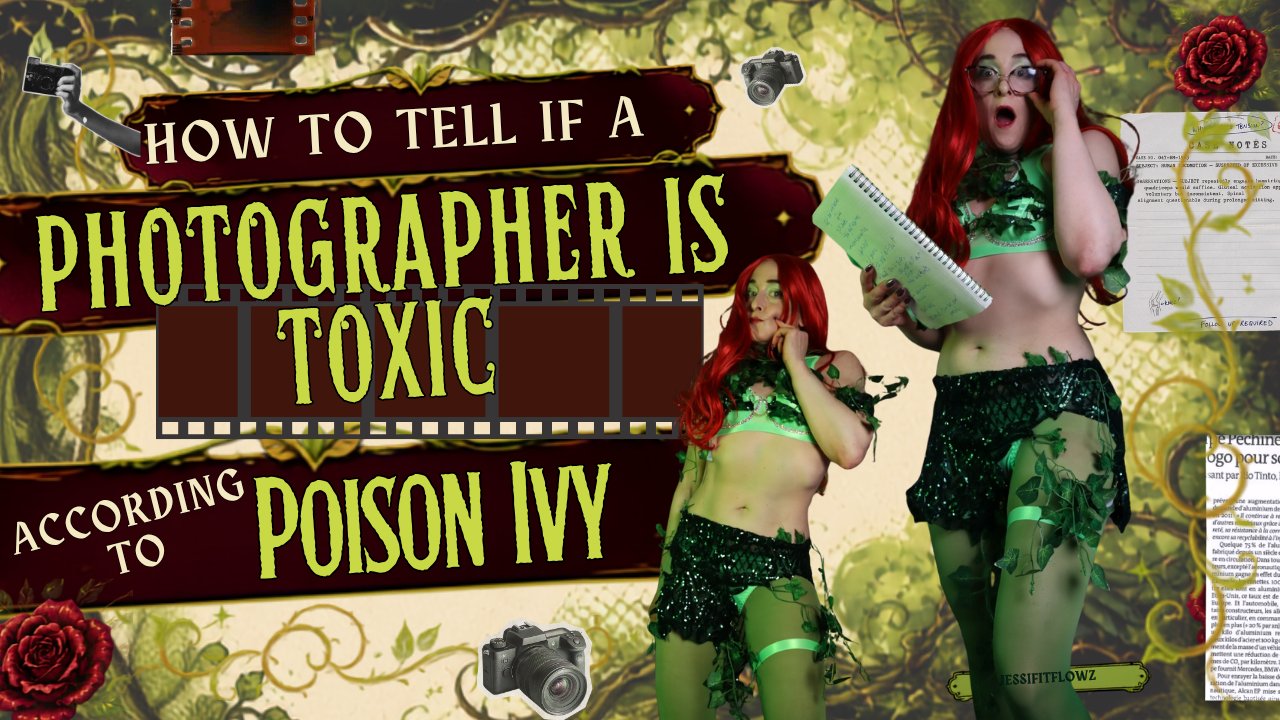
HOW TO TELL IF A PHOTOGRAPHER IS TOXIC
ACCORDING TO POISON IVY
Some things are beautiful and still poisonous.
Cosplay photography has introduced me to some genuinely extraordinary photographers: talented, creative, professional people who can look at an ugly parking garage and somehow turn it into Gotham City.
And then there are the others.
The photographer whose portfolio looks gorgeous but whose DMs make your skin crawl. The one who changes the concept after you arrive. The one offering “TFP” who somehow only seems interested in photographing women wearing approximately three inches of fabric.
Poison Ivy understands this problem better than most.
Pretty things can still be toxic.
Here’s how I inspect the garden before I agree to a shoot.
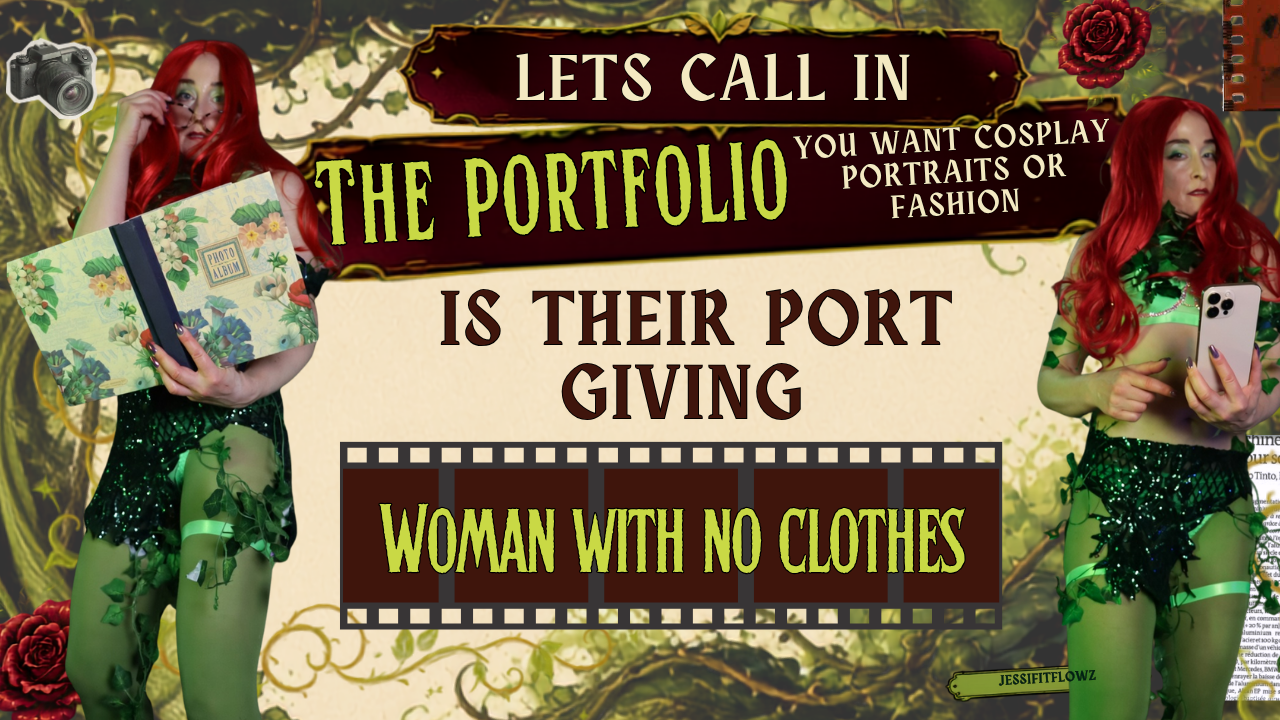
1. LOOK AT THE ENTIRE PORTFOLIO
Do not just look at their three best Instagram posts. Scroll.
Who are they photographing? How are those people being photographed? Is there variety in their work, or does every woman somehow end up in lingerie, wet, bent over, topless, or photographed from approximately crotch altitude? There is nothing inherently wrong with erotic photography. I shoot sexy content. That is not the issue.
The issue is when someone tells you they shoot cosplay, fashion, portraits and editorial, while their portfolio suggests their actual artistic specialty is Woman, But With Less Clothing.
Believe the portfolio. It tells you what they actually enjoy making.
And if you are newer to shooting, there is nothing wrong with deliberately starting with photographers who make you more comfortable. For some women, that means working with another woman first. For other people, gender has nothing to do with it. Choose the environment where you know you will be able to communicate clearly instead of spending the entire shoot managing somebody else's energy.
2. ASK OTHER MODELS
This is one of the easiest screening tools you have.
If you recognize someone in their portfolio, send them a private message: “Hey, I’m considering shooting with this photographer. How was your experience?” You do not need to do an investigation. You need information from somebody who has actually been in the room.
Pay particular attention to answers that begin with, “They were nice, but…” Sometimes that but contains an entire HBO miniseries.
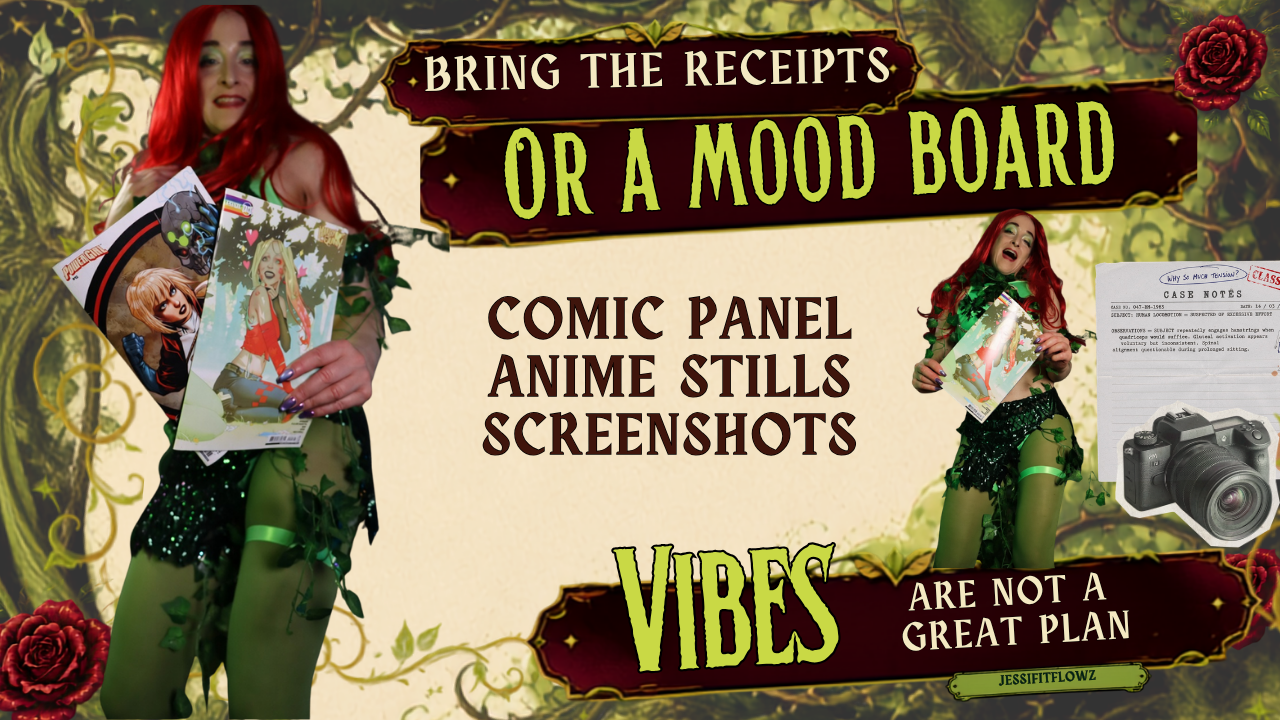
3. COME WITH A MOOD BOARD
Do not show up expecting everybody to psychically understand what “dark Poison Ivy energy” means.
Bring references. For cosplay shoots, I like having actual images from the source material: comic panels, anime screenshots, movie stills, game art, poses, lighting references and specific compositions.
If I want Poison Ivy lounging like she does in a particular comic panel, I can literally show the photographer the panel. If I want an anime-style low camera angle, I can show them that. If the character has an iconic pose, bring it.
A mood board gives you and the photographer a shared visual language before anyone starts shooting. It also tells you something about the photographer. Can they look at a reference and figure out how to translate it into a real location with a real human body, real lighting and whatever costume engineering disaster you brought with you?
Yes vibes are a thing I’ve worked on, but it’s a risk that we wont have the same vibes ….
4. MAKE SURE THEY UNDERSTAND THE CHARACTER
Your photographer does not need to have read every issue of Batman.
But if you are shooting Poison Ivy, Harley Quinn, Catwoman, Supergirl or an anime character, they should at least understand what you are trying to create. Send references ahead of time. Talk about whether the character should feel dangerous, playful, glamorous, eerie, powerful, campy or sexual.
Otherwise you may arrive dressed as a terrifying supervillain and discover that your photographer has apparently decided you are shooting a senior portrait.
5. DOES THE CONCEPT STAY THE CONCEPT?
You agree to Poison Ivy cosplay in a greenhouse.
You arrive. Suddenly: “Would you also do lingerie?” “Could we make it implied?” “Do you ever shoot nude?” “We could do something really artistic in the shower.”
Interesting, because none of that was in the original conversation. Creative ideas can evolve during a shoot. That is normal. But sexual escalation should never be treated like a surprise upgrade package. If you agreed to cosplay, you agreed to cosplay. If you agreed to boudoir, you agreed to boudoir. If you agreed to implied nude, you agreed to implied nude.
Those are separate conversations.
6. ASK ABOUT BTS BEFORE THE SHOOT
If you create content, ask whether you can film behind-the-scenes footage.
Do this before the shoot, not after you have already set up a tripod in somebody’s studio. Can you film clips for Instagram or YouTube? Can someone accompanying you shoot BTS? Is the photographer comfortable appearing on camera? Can you show the lighting setup? Is the location private or restricted?
For creators, BTS can be almost as valuable as the finished photographs. You can turn one shoot into reels, stories, blog content, tutorials, transformation edits and character-development posts. A photographer may have completely legitimate reasons for limiting BTS. What matters is that you discuss it beforehand instead of discovering incompatible expectations on set.

7. GET THE SHOOT DETAILS IN WRITING
Before I work with someone, I want to know what we are shooting, where we are shooting, approximately how long we are shooting, what wardrobe I need, what they are providing, whether the shoot is paid or collaborative, what images I receive, approximately when I receive them and what everyone is allowed to do with those images.
This does not require a 47-page contract.
It requires two creatives knowing what they agreed to.
Shoot your photog a brief in an email… or ask that they do the same
8. READ THE RELEASE
This is not something you should just sign without reding, and yes I have done that and regretted it…. Pay particular attention if you shoot cosplay, boudoir, adult or commercial content.Can the you and photographer publish the images? License them? Sell prints? Submit them to publications? Use them commercially? Alter them? Keep using them indefinitely?
Do not assume “TFP” means both parties can simply throw the images on Instagram and nothing else. The agreement decides that. If you do not understand something, ask.
9. ARE THEY WEIRD ABOUT YOU BRINGING SOMEONE?
Sometimes I am completely comfortable working one-on-one. That is my choice.
But if you want to bring an assistant, makeup artist, friend or other person, ask beforehand. There can be legitimate restrictions: a tiny studio, restricted location, closed set, client confidentiality or limits on how many people can access a space. But if somebody becomes aggressively opposed to another person being anywhere near the shoot without a reasonable explanation, that is information worth considering.
You have a right to feel safe.
10. DO THEY RESPECT YOUR TIME?
Toxic does not always mean sexual. Sometimes toxic means this person is an absolute professional nightmare.
Repeated cancellations. Showing up wildly late. Changing locations while you are already traveling. Expecting six hours of shooting when you agreed to two. Taking nine months to deliver photos. Ghosting, then resurfacing asking to shoot again. Creatives are human. Things happen. Repeated chaos is a pattern.
Your time has value even when nobody is exchanging money.
11. ARE YOU ALLOWED TO HAVE AN OPINION ABOUT YOUR OWN IMAGE?
Photography is collaborative, and cosplay makes that especially important.
You know the character. You know the costume. You know which pieces move, which poses work and which angle makes the wig suddenly look like it came from Party City. The photographer brings visual expertise. You bring yours. That does not mean directing every frame.
It means you should be able to say, “That angle isn’t working for me,” or “Can we try the comic reference?” without the atmosphere changing.
11. TALENT DOES NOT CANCEL BAD BEHAVIOR
This is the trap.
Their work is gorgeous. Their lighting is insane. Their images get published. Everybody follows them. So people tolerate behavior they would never tolerate from somebody with 600 followers and a Canon Rebel.
A beautiful portfolio does not provide diplomatic immunity. You are allowed to decide that the photographs are simply not worth the experience.
There are other photographers.
12. DO THEY UNDERSTAND HOW TO LIGHT FOR COSPLAY
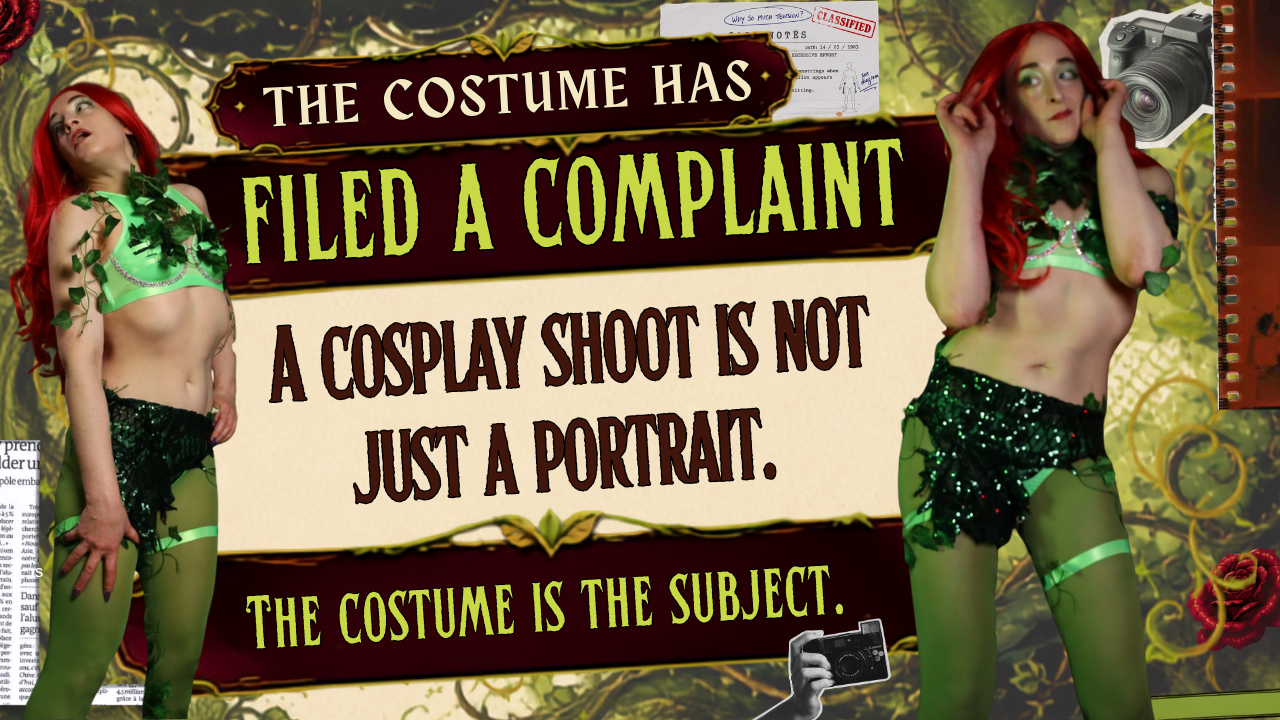
A cosplay shoot is not just a portrait. The costume is the subject.
YOU WANT TO SHOW OFF the makeup, the wig, the construction, the color, the details and the character.
I did a shoot where the photographer chose the time, and the light ended up harsh enough that I was squinting while every line in my face suddenly became part of the composition. At the same time, parts of the costume were competing with shadow and the environment. That was not what I needed from a cosplay shoot.
I am gonna own it and say I failed to ask: How are we lighting this? Are you using flash? Another way to brighten up my old ass face? Will my face and costume actually be visible? Are we prioritizing a viewmof the bay with me in it?
ATMOSPHERE IS NOT THE WHOLE ASSIGNMENT
This is especially true when were compositing our lives away in post
POISON IVY’S FINAL TEST
Before I shoot with someone, I ask myself three things:
Do I like their work?
Do they communicate like a professional?
Do they respect what we agreed to?
If all three answers are yes, fantastic.
Bring your mood board. Bring the comic panels. Bring the anime screenshots. Recreate the ridiculous impossible pose. Shoot the BTS. Climb into the ivy. Become the supervillain. But if something keeps feeling slightly off, pay attention to the pattern.
Toxic usually oozes out long before anyone takes the first snap
Unsure where to start with posing?
