Your Lower Back: Blamed For Crimes It Did Not Commit
Poison Ivy has reviewed the evidence.
The lower back is clear of all allegations.
This may surprise some of you because the lower back has become the primary suspect in nearly every discomfort-related investigation.

Back feels tight? Blame the lower back.
Back feels stiff? Blame the lower back.
Wake up sore after a series of enthusiastic life choices? Blame the lower back.
Case closed.
Or so we’ve been told.

Every gardener knows the same rule: when something starts struggling, you don’t immediately blame the leaf.
You check the roots.
You check the soil.
You look at the entire system before deciding where the problem actually lives.
Your body works the same way.

The lower back doesn’t exist in isolation. It’s connected to the hips, glutes, hamstrings, abdominals, and the muscles that support the pelvis and spine. When those areas stop contributing, the lower back often steps in to cover their shifts.
Then the lower back gets tight.
Then everyone blames the lower back.
Rude.
The stretching.
The massage gun.
The heating pad.
The foam roller.
Mostly the blame.
Some of those things can absolutely help. Relief matters.
But relief and resolution are not always the same thing.
The strongest solution is rarely attacking the area that hurts the most.
It’s usually identifying what stopped contributing in the first place.
After reviewing the evidence, Poison Ivy identified four primary persons of interest.
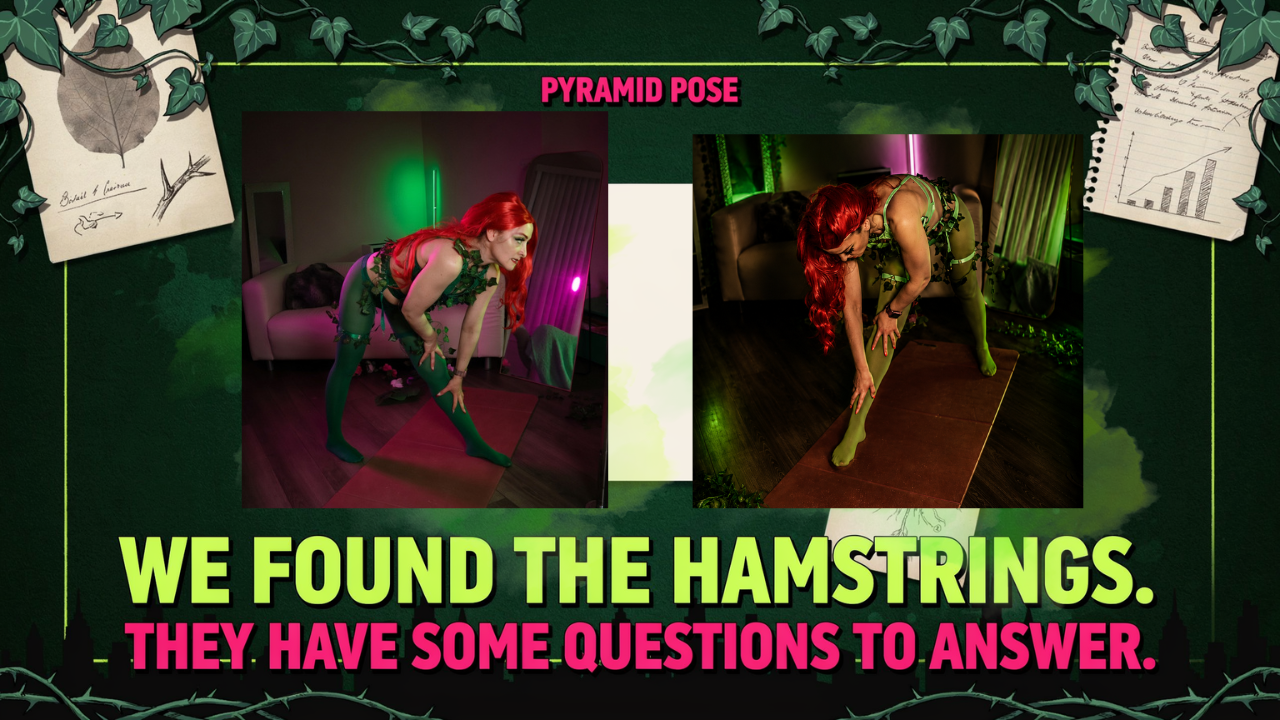
PYRAMID POSE
We Found the Hamstrings.
Stand with one foot forward and one foot back. Fold over the front leg while keeping both legs long.
You should feel a stretch through the back of the front thigh.
Breathe.
Don’t force it.
The hamstrings have agreed to answer a few questions, which is more cooperation than we’ve received from some of the other suspects.
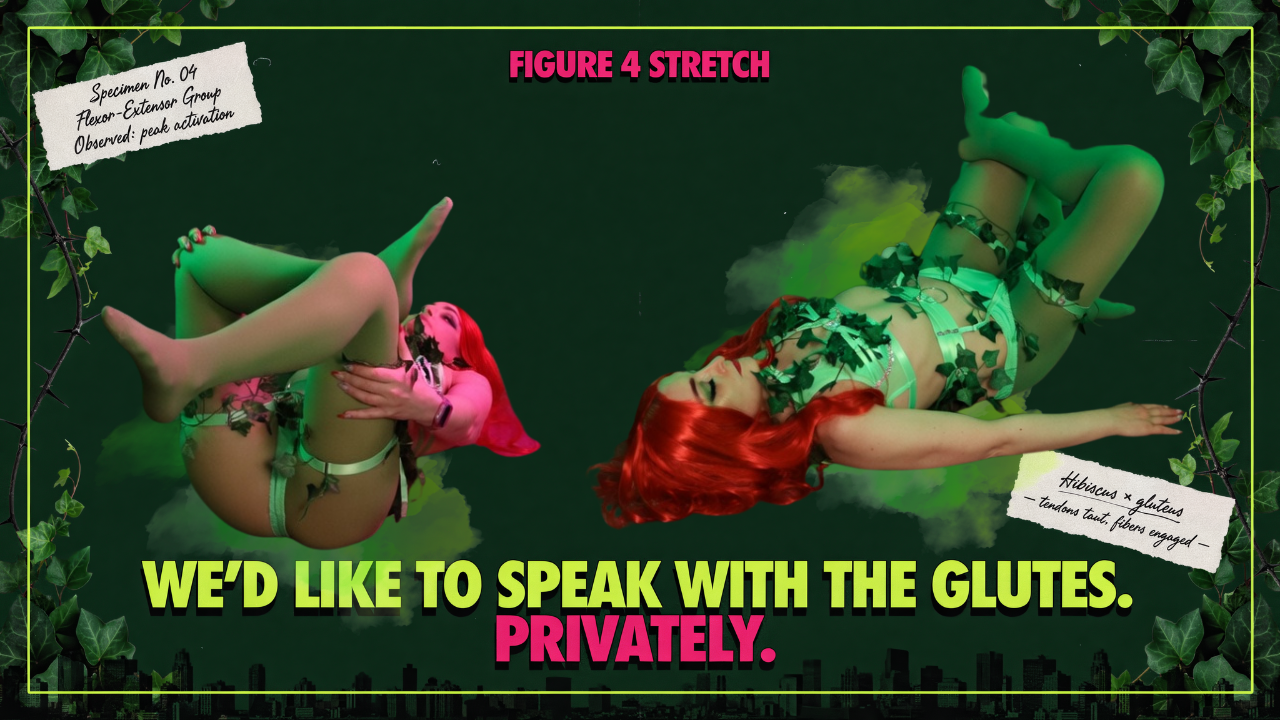
FIGURE 4 STRETCH
We’d Like to Speak With the Glutes. Privately.
Cross one ankle over the opposite knee and gently draw the legs toward your chest.
This targets the deep glutes and outer hip.
If the stretch immediately starts negotiating terms, you’re probably in the right place.
SIDE PLANK
The Core Has Finally Agreed to Cooperate.
Stack the shoulder over the wrist and lift through the waist.
Hold.
Breathe.
Try not to collapse into the shoulder.
The core has spent a remarkable amount of time avoiding this investigation. Consider this a formal request for participation.

SPHINX POSE
The Lower Back Is Clear of All Allegations.
Lie on your stomach and prop yourself up on your forearms.
Open through the chest.
Breathe steadily.
Allow the front of the body to lengthen without forcing the movement.
At this stage of the investigation, the evidence is becoming difficult to ignore.
The lower back may not have been the problem at all.

THE OFFICIAL FINDINGS
After reviewing all available evidence:
The hamstrings were involved.
The glutes know more than they’re saying.
The core should probably answer a few emails.
The hips remain persons of interest.
The lower back appears to have been covering everyone’s shift.
Again.
The next time your lower back starts complaining, don’t just ask:
“How do I make this stop?”
Ask:
“What is my body trying to tell me?”
Because the area that’s hurting isn’t always the area that’s responsible.
And the lower back has been blamed for crimes it did not commit for far too long.
Want more villain-approved mobility, flexibility, and recovery strategies?
Join the newsletter and grab the free guide.
Poison Ivy believes in working with the system.
Your body would probably appreciate the same courtesy.
