Stormtrooper Feet: Why Your Toes Are Dead (And How Demonias Finished Them Off)
Your Demonias Didn’t Ruin Your Feet.
Your Feet Were Already Ruined.
The Demonias just finished the job.
Your foot has 26 bones and 33 joints
most people are using approximately none of them correctly .
Not because the foot is broken.
Because most modern footwear turns the entire foot into one stiff block long before people ever buy platforms. Sneakers do it. Cheap flats do it. Narrow boots do it.
Demonias just expose the problem faster because now you’re putting a rigid foot on top of a giant platform and asking it to stabilize your entire body for six hours at a convention.
Then people wonder why:
their arches hurt
their calves lock up
their balance gets weird
their knees ache
their lower back feels cooked
the inside edge of the boot wears down unevenly
The problem usually starts years before the platforms.
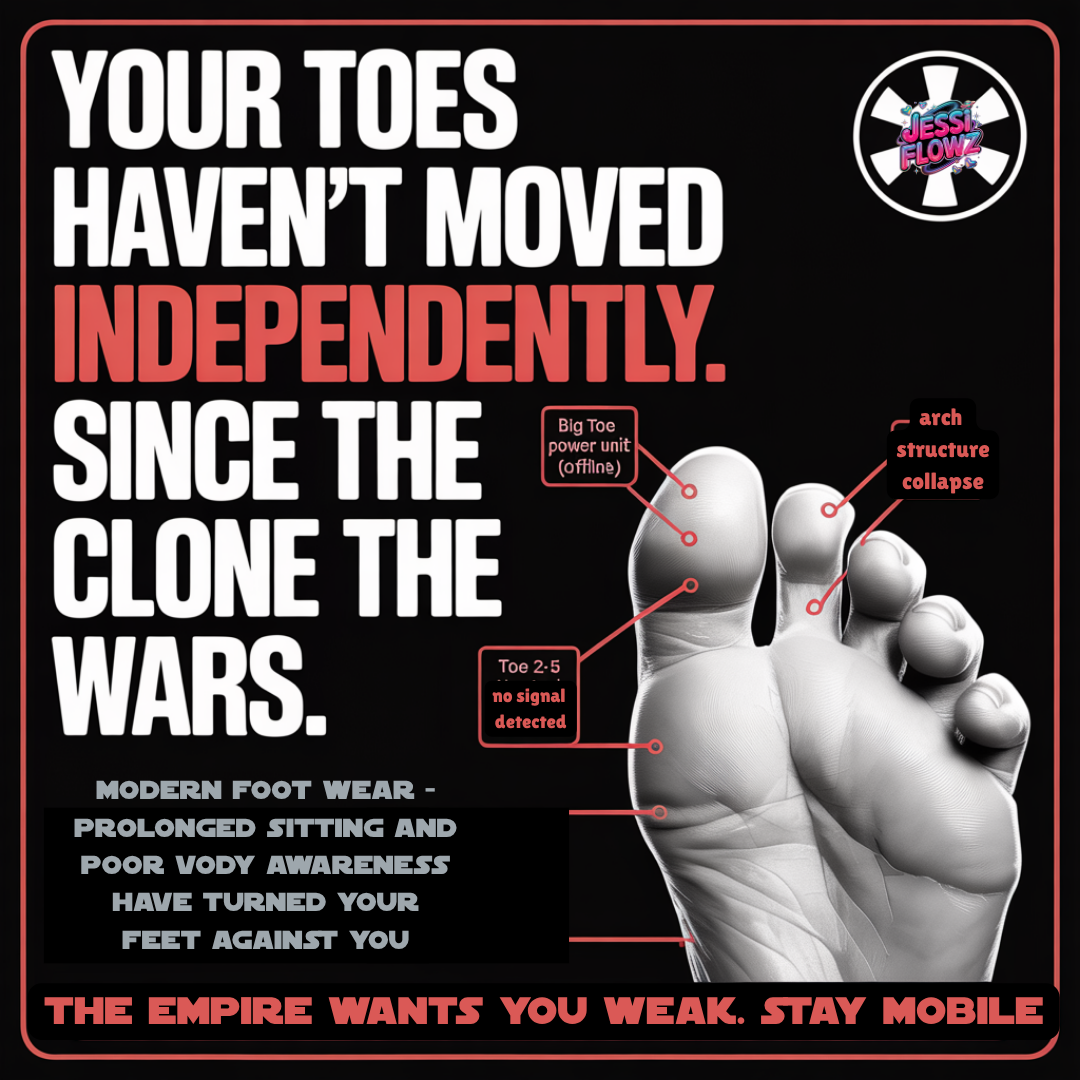
At some point your toes stopped moving independently and your nervous system adapted to it.
That’s the part nobody talks about.
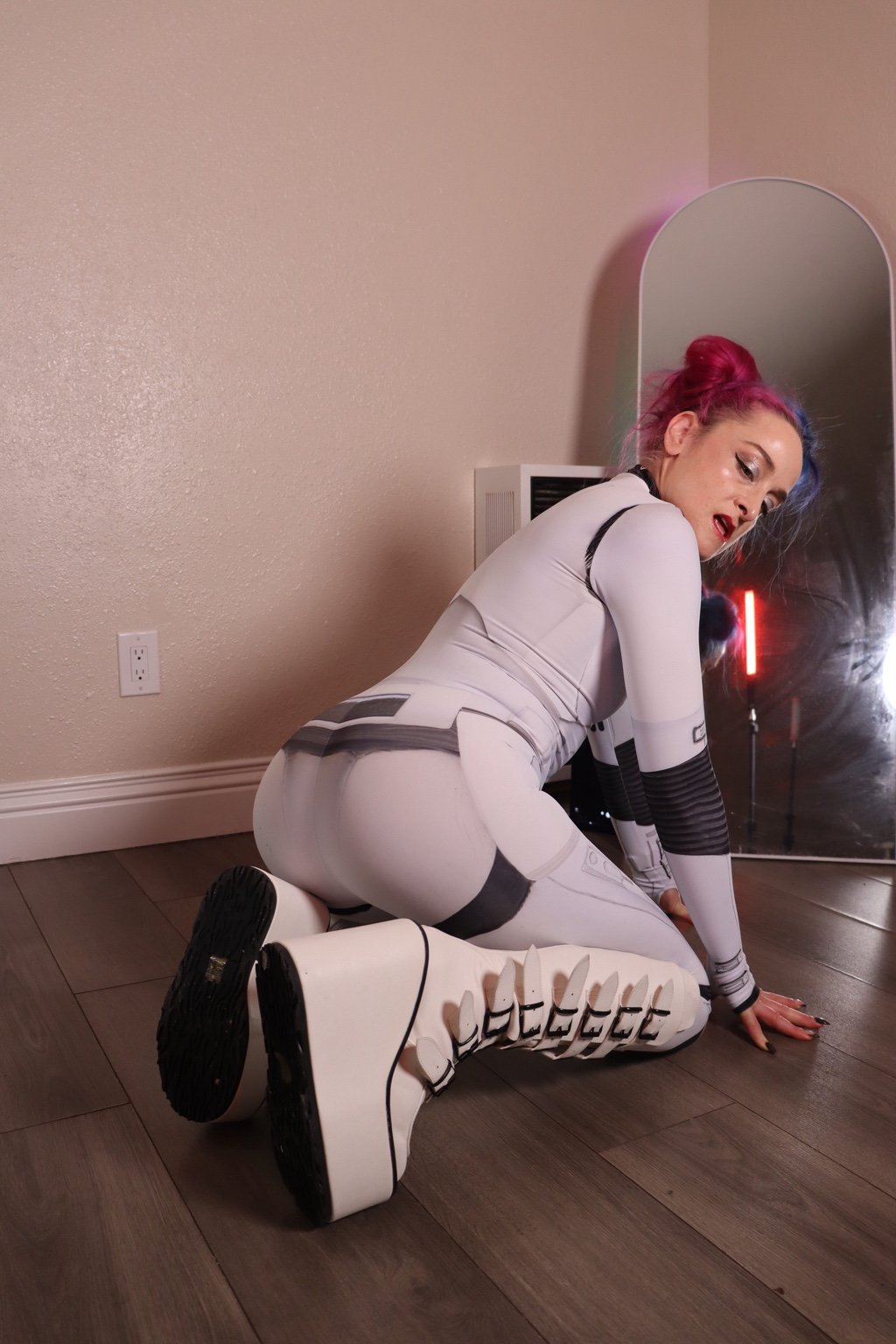
The Stormtrooper Problem
This is why some people walk in giant platforms looking stable and powerful while other people look like they’re trying not to fall through reality itself.
One foot still functions.
The other one is basically decorative.
That’s a Stormtrooper situation. All armor. No mechanics.
Your feet are supposed to constantly adapt to the floor underneath you. Tiny weight shifts. Tiny pressure changes. Tiny balance corrections happening every second.
Most people lose a huge amount of that without realizing it.
The foot becomes rigid.
The toes stop separating properly.
The arch stops reacting dynamically.
The ankle gets stiff.
The body compensates upward.
And because the compensation happens gradually, people think discomfort is normal.
They think:
“Platforms just hurt.”
Not necessarily.
Bad mechanics hurt.
Your Foot Is Not One Bone
People talk about “the foot” like it’s one object.
It’s not.
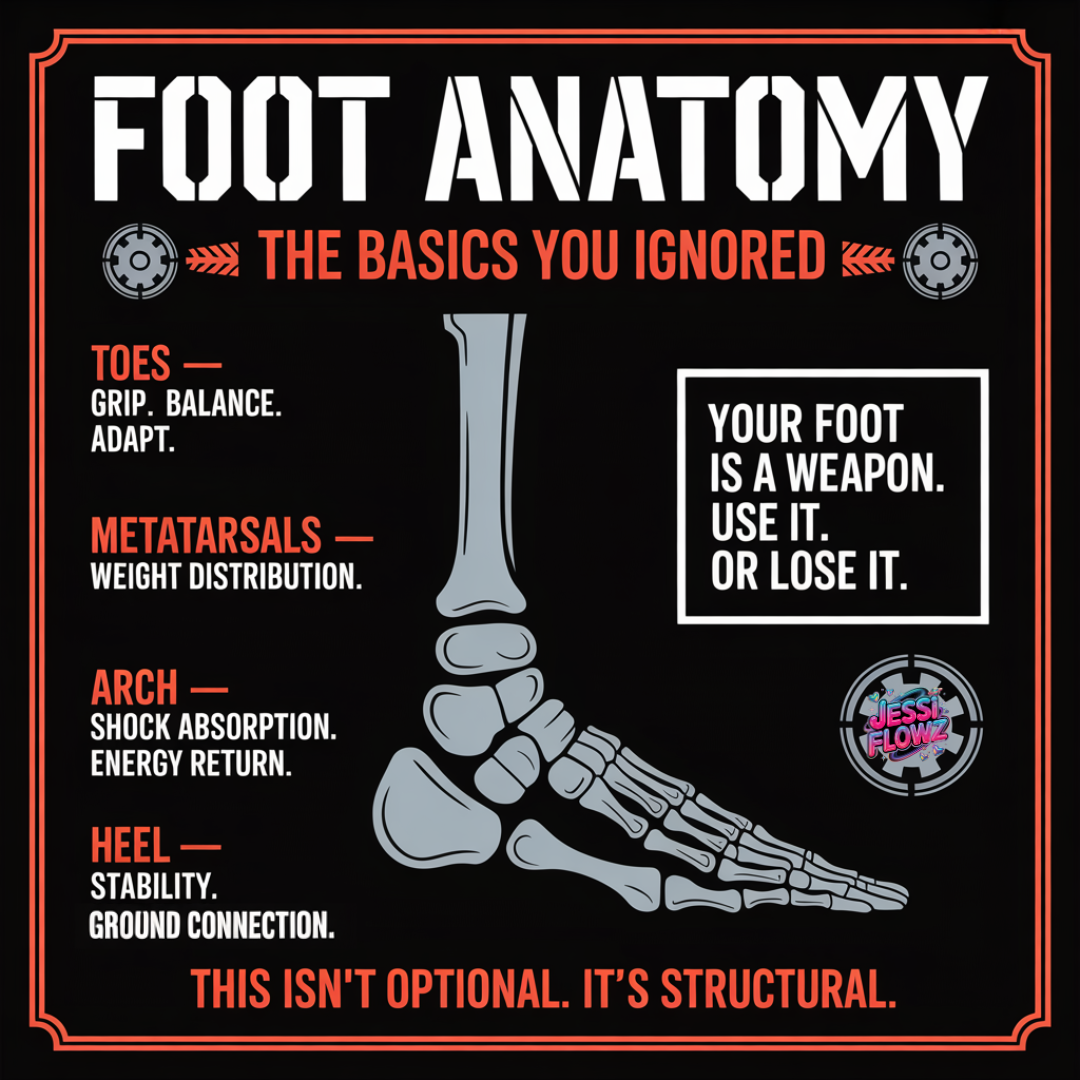
The foot is an entire system.
You have:
26 bones
33 joints
over 100 muscles, tendons, and ligaments
intrinsic foot muscles that stabilize the arch
toe flexors and extensors
fascia connecting everything together
sensory nerves constantly feeding information into the brain
Your feet are basically your body’s suspension system.
And most people shoved them into restrictive shoes so early that the nervous system stopped expecting much movement from them at all.
That’s why people can squat, deadlift, and train glutes constantly while still having feet that barely function.
Fitness culture will spend five years discussing hip dips and absolutely ignore the literal foundation underneath the entire body.
Your Big Toe Is Carrying The Entire Operation
Your big toe matters way more than people realize.
When you walk, the body shifts weight forward and pushes off through the ball of the foot. The big toe is supposed to extend and stabilize that push-off phase.
If it doesn’t move correctly, the foot starts compensating.
Usually the arch collapses inward slightly.
Then the ankle loses alignment.
Then the knee rotates inward.
Then the hip changes position.
Then the lower back starts handling forces it was never designed to absorb repeatedly.
Not enough to cause immediate disaster.
Just enough that after several hours in platforms your body feels exhausted in a way that seems weirdly disproportionate to what you were actually doing.
That’s because every step was slightly inefficient.
And “slightly wrong” repeated thousands of times becomes pain.
The Smaller Toes Matter Too
People ignore the smaller toes completely until they lose balance in heels.
Those toes help your nervous system understand:
pressure
balance
weight distribution
surface contact
directional changes
That’s proprioception.
Your body is constantly mapping where you are in space through input from the feet.
When toes stop moving independently, the nervous system loses detail. You’re balancing with less information.
That’s why some people in giant platforms look grounded and controlled while other people look like they’re trying to survive a small earthquake in a food court.
The body starts gripping for stability.
Toes curl.
Calves tighten.
Hips brace.
The jaw clenches.
Everything upstream reacts.
People think they have a “weak core” when half the problem started at the floor.
The Arch Only Works When The Toes Work
The arch is supported by muscles that are supposed to react dynamically to pressure and movement. If the toes stop moving properly, those muscles stop receiving good signals.
The body adapts by becoming passive.
The movement disappears.
The sensory feedback decreases.
The arch stops behaving like an active structure.
Its at this point tht you’ll buy an insert or start dig all the things to fake support- instead of rebuilding it from the s=insude….
Anything you do in a platform is just going to be MAGNIFIED
Demonias didn’t START this fire boo
They just are made of PVC….
That’s a Stormtrooper situation. All armor. No function
You can hide bad foot mechanics inside regular daily wfh life for years.
You cannot hide them as easily when:
balancing in platforms
pointing the foot repeatedly in dance classes
climbing stairs in stumpy platforms
stabilizing dynamically at a con in pleasers
shifting weight side to side in stilettos
The second movement quality becomes part of the activity, the dysfunction becomes obvious.
That’s why so many people suddenly realize:
“Wait. My toes literally do not move separately anymore.”
The Test
Take your shoes off.
Barefoot. Feet flat on the floor.
Try lifting only your big toe while the other four stay down.
Most people can’t do it.
Either:
all five toes lift together
nothing happens
the foot cramps
the smaller toes get dragged upward involuntarily
Now reverse it.
Keep the big toe planted and lift the other four.
Most people completely fail that one.
That’s not because you’re weak.
It’s usually because the neurological pathway stopped getting used consistently.
Your brain basically simplified the command into:
“toes move together.”
The individual control faded because the body stopped needing it often enough.
The good news is the nervous system is adaptable.
You can rebuild the connection.
The Drill
Five barefoot minutes.
Before conventions.
Before shoots.
Before platforms.
Before dance classes
That’s enough to start changing the way the foot functions.
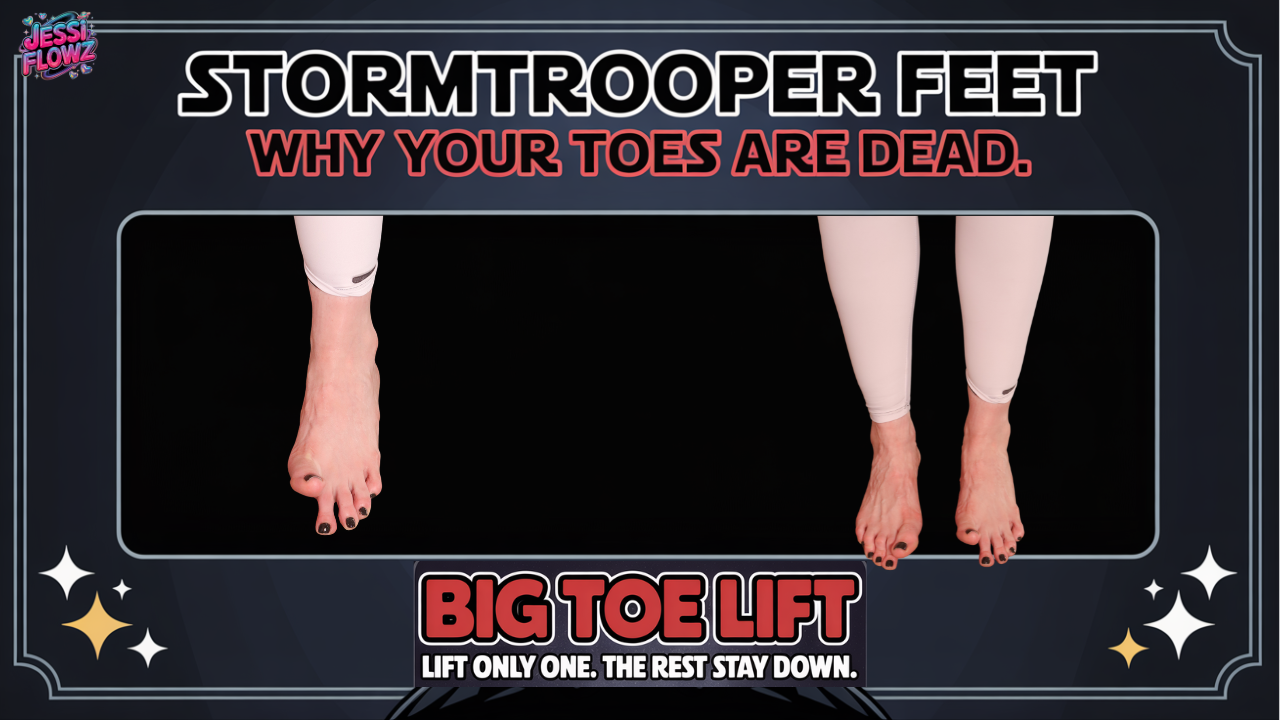
1. Big Toe Lift
Feet flat.
Lift only the big toe.
Keep the smaller four down.
Hold for two seconds.
Lower slowly.
The lowering matters.
Ten reps each foot.
If needed, hold the smaller toes down with your hand while you practice.
2. Four Toe Lift
Big toe stays planted.
Lift the smaller four toes.
This one feels impossible for a lot of people initially.
That’s normal.
The attempt itself is part of the retraining process.
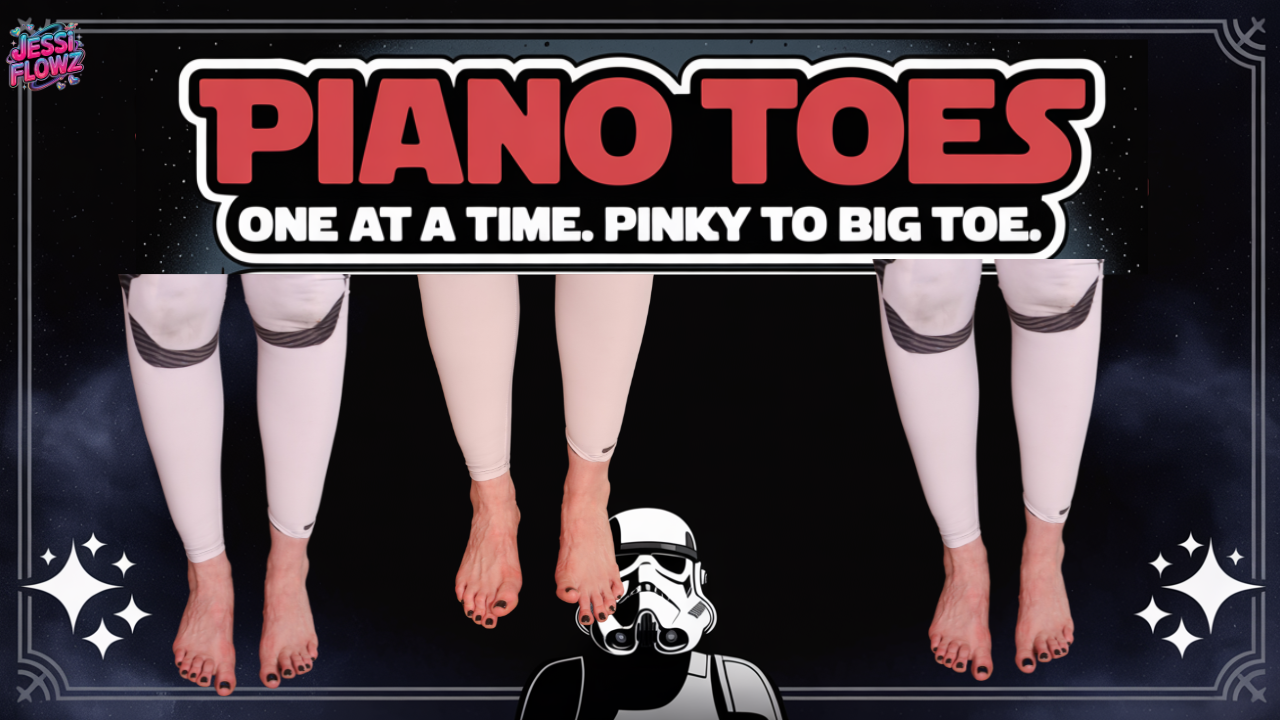
3. Piano Toes
Lift all five toes.
Lower them one at a time:
pinky
ring
middle
index
big toe
Then reverse the sequence.
This feels ridiculous at first because most people’s toes move in clusters instead of independently.
That’s the point.
4. Toe Spread
Spread all five toes apart as wide as possible.
Hold for five seconds.
Release.
Three rounds.
Most people’s toes have been compressed together for so long that the spread range is tiny at first.
That improves surprisingly quickly with repetition.
The Real Point
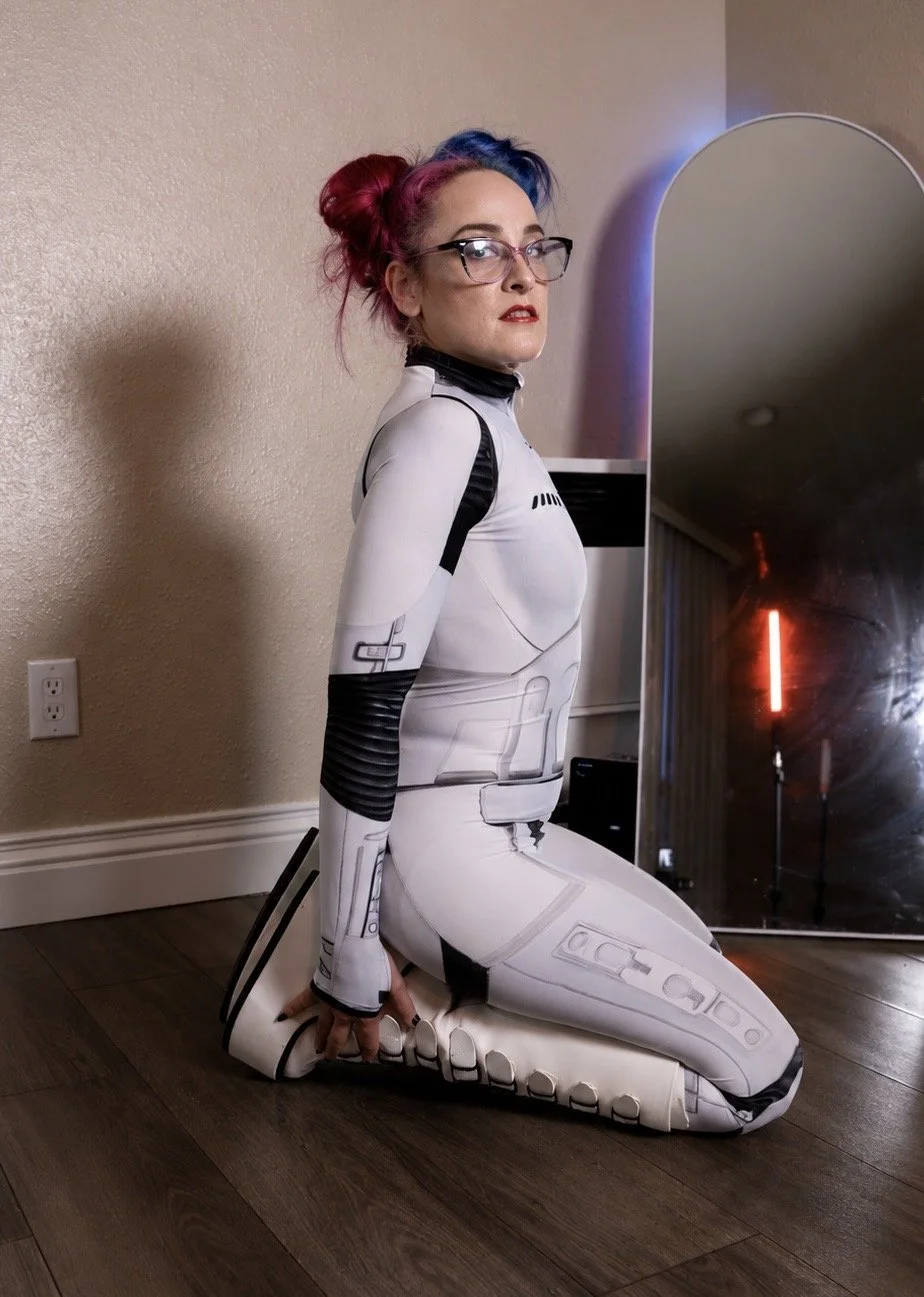
I’m not telling people to stop wearing Demonias.
I’m literally part of the problem.
I love giant platforms. I love ridiculous boots. I love cosplay footwear that looks like it belongs in a sci-fi dictatorship.
But your feet still need to function underneath the aesthetic.
People spend hundreds of dollars on boots and almost no time maintaining the system inside them.
Your foot has 26 bones and 33 joints.
Start using them.
Your toes are not supposed to feel numb after Comic-Con.
Grab the foot rolling guide below for the full reset routine, mobility drills, and recovery work I use before shoots, pole sessions, and platform-heavy days.
Bonus content and behind-the-scenes villain nonsense live on my fan page.

