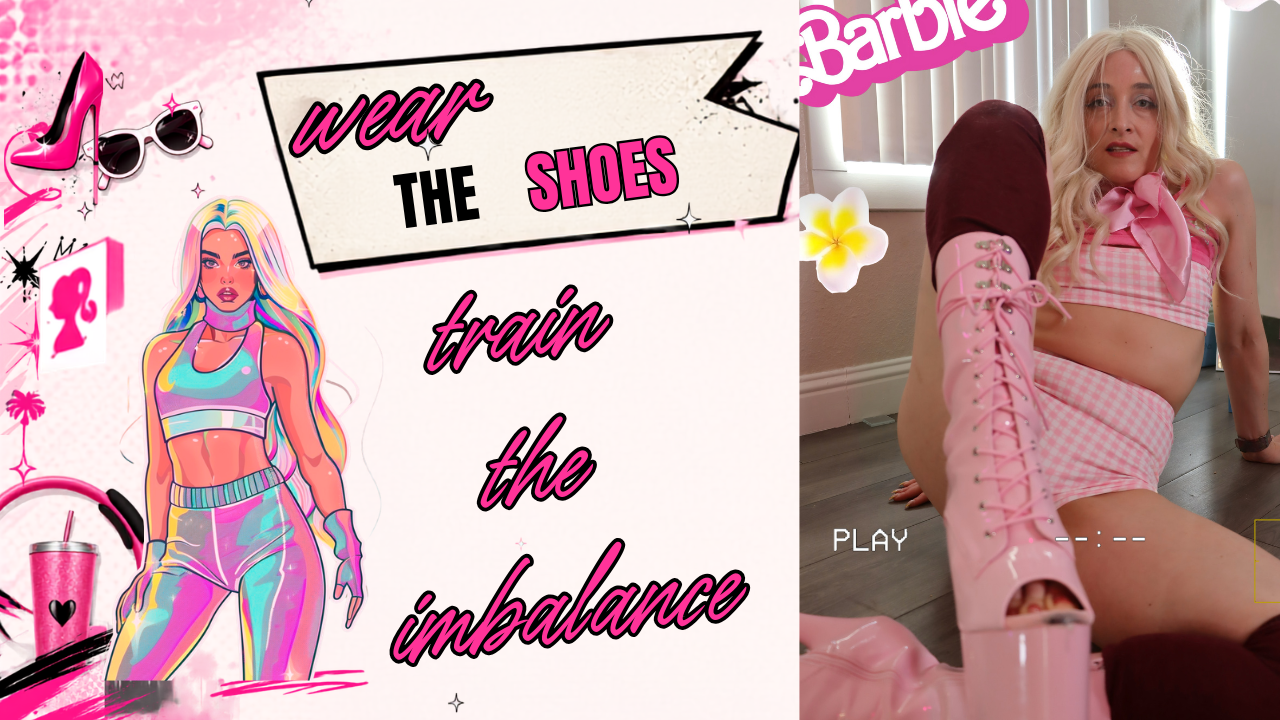
What Pleasers Are Actually Doing to Your Toes
And why you don’t have to stop wearing them
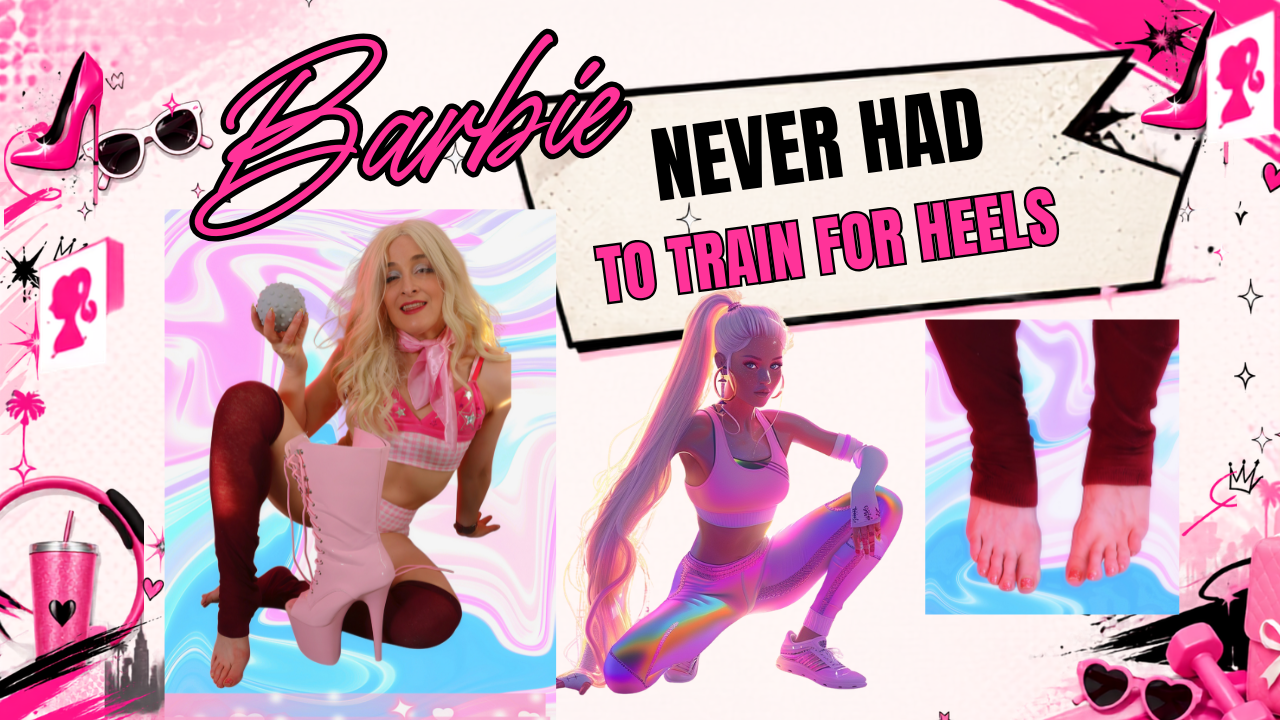
Barbie never had to train for heels. Her feet were molded that way.
Permanent arch. Tiny little pointed foot. Ready for a heel straight out of the box.
You, unfortunately, were issued functional human feet.
Pleasers weren’t designed by a podiatrist either. They were designed to survive a stage, a pole, repeated impact, and hours of wear while making your legs look approximately nine miles long.
A doctor might have had different engineering priorities. That doesn’t make Pleasers bad shoes. It makes them specialized shoes. A Pleasers platform has a job: height, grip, stability, durability, performance. Free, independent toe movement is not really the assignment.
So if you spend a lot of time in them, the useful question isn’t, “Are heels bad for me?”
It’s: Am I training my feet for what I’m asking them to do?
What Happens to Your Feet Inside the Shoe
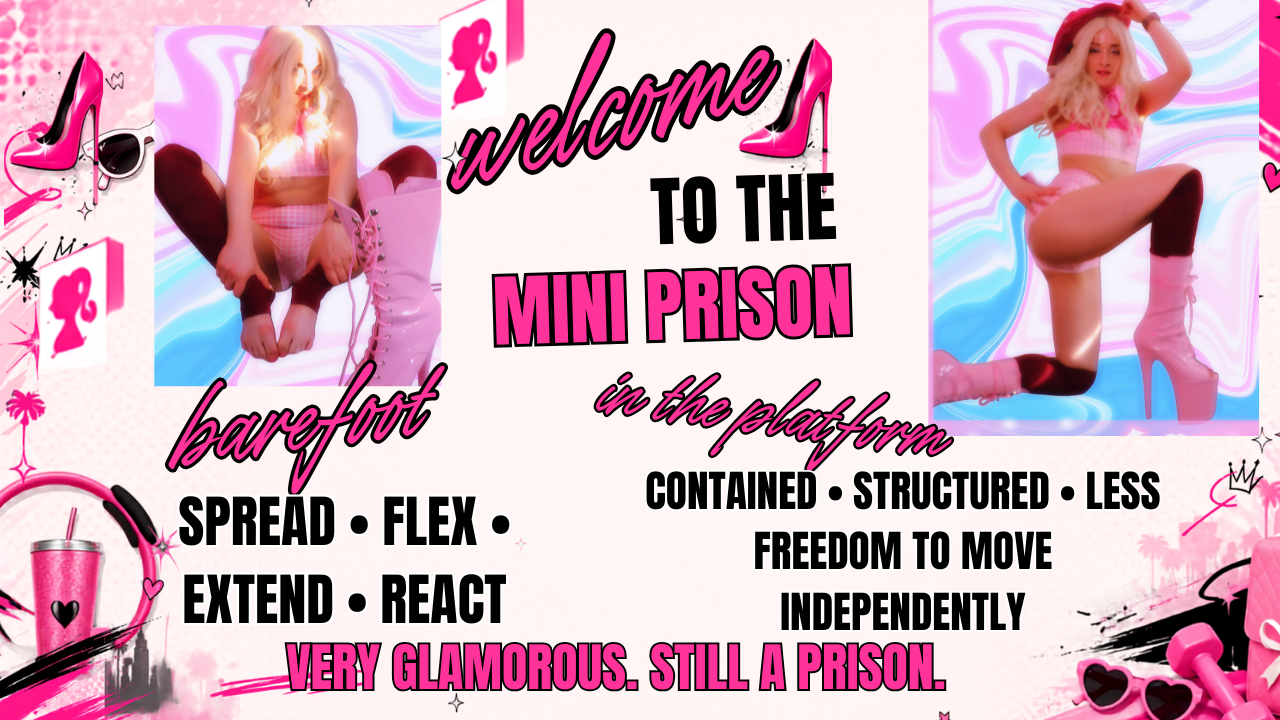
Look at the difference between your bare foot and your foot inside a platform heel.
Barefoot, your toes can spread, flex, extend, react to the floor, and adapt to whatever surface you’re standing on. Inside a hard, structured toe box, they have a lot less freedom. Your toes are basically in a mini prison. Not necessarily a dangerous prison. More like a highly glamorous detention center with an eight-inch platform.
Your foot is being asked to work inside the structure the shoe gives it. That isn’t automatically a catastrophe. Human bodies deal with constraints constantly. But if you repeatedly spend time doing one thing, it makes sense to deliberately train the things that activity gives you less of.
That’s the part people tend to skip.
They wear the shoes. Their feet get tired or stiff. Then the answer becomes either:
Buy another shoe.
or
Stop wearing heels.
There is a third option.
Train the Imbalance
This is one of the ways I think about movement training: What does the activity ask your body to do?
And then: What does it not ask your body to do?
That second question matters.
Your workout does not always need to give you more of whatever your activity is already giving you. Sometimes it needs to train the opposite.
Pleasers keep your foot contained inside a very specific structure. So when the shoe comes off, I want my toes doing the things the shoe isn’t asking them to do.
Spread. Articulate. Move independently. Interact with the floor. That’s the imbalance.
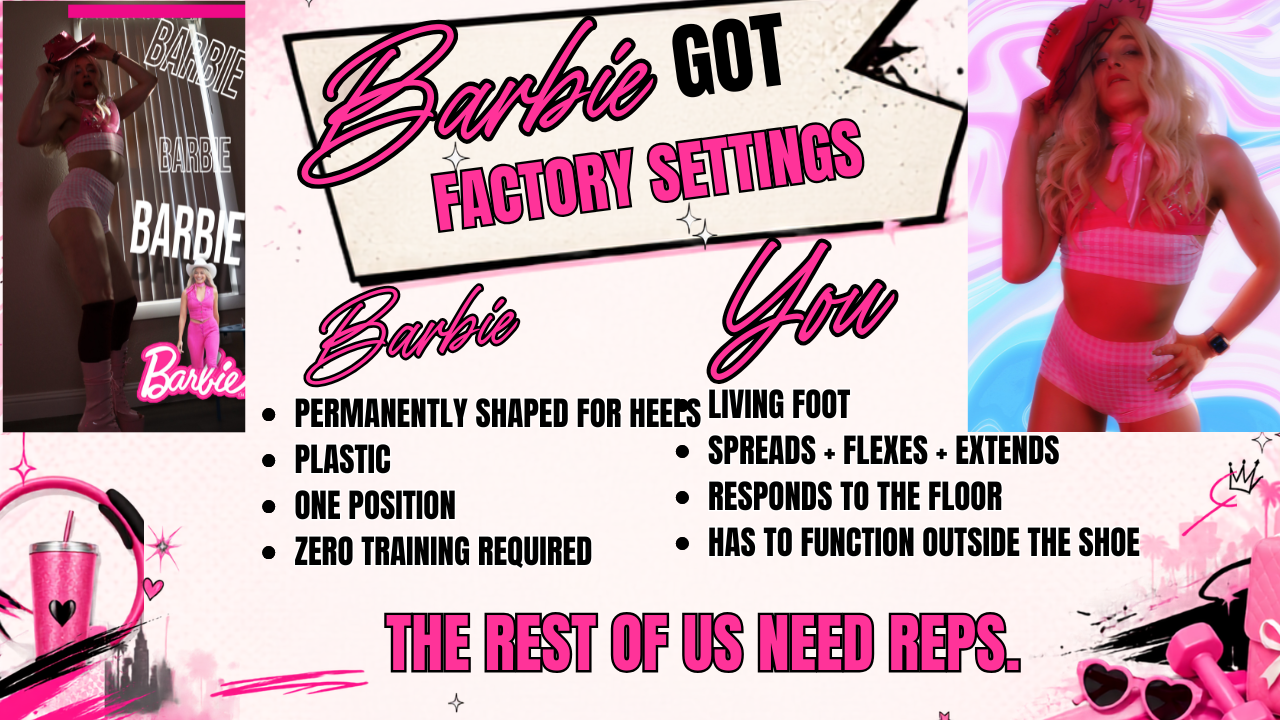
Barbie got factory settings. The rest of us need reps.
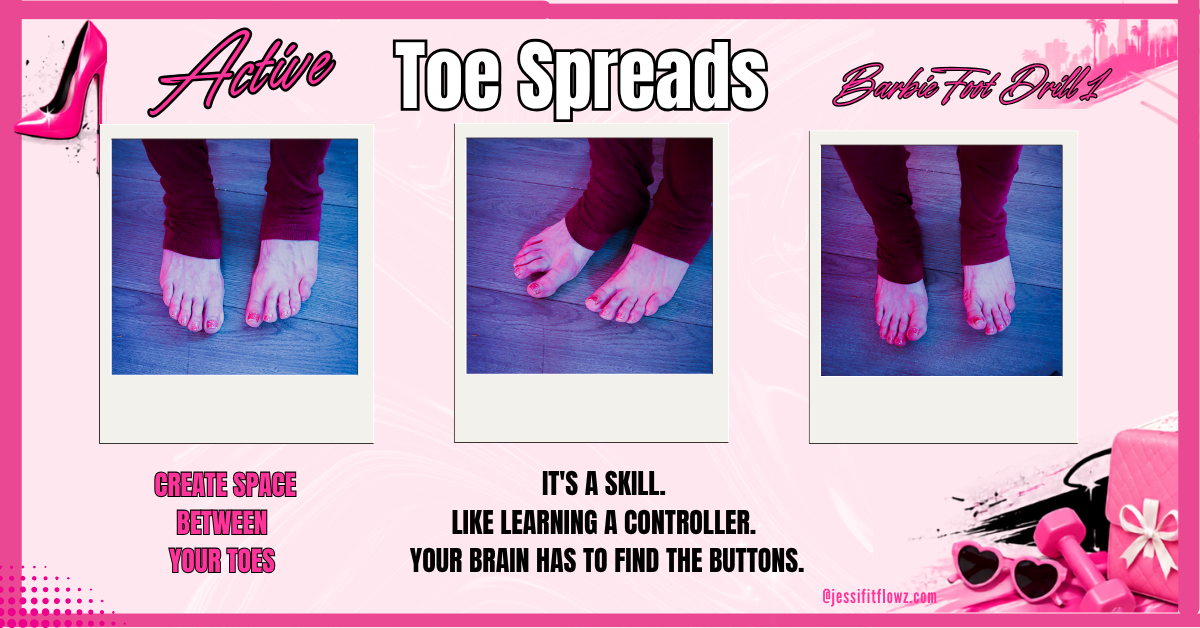
1. Active Toe Spreads
Take your shoes off and place your foot flat on the floor.
Now try to actively create space between your toes without rolling your ankle outward.
And try not to use your hands.
I want the foot doing the work.
This is a skill.
Think about learning a video game controller or riding a bike. At first, your brain knows what you want to happen and your body is basically saying, I have no idea which button that is.
Same thing here.
The goal isn’t to create the widest toe spread ever documented by science. You’re practicing the ability to move the toes apart after they’ve spent time contained inside a shoe.
Very glamorous Barbie behavior.
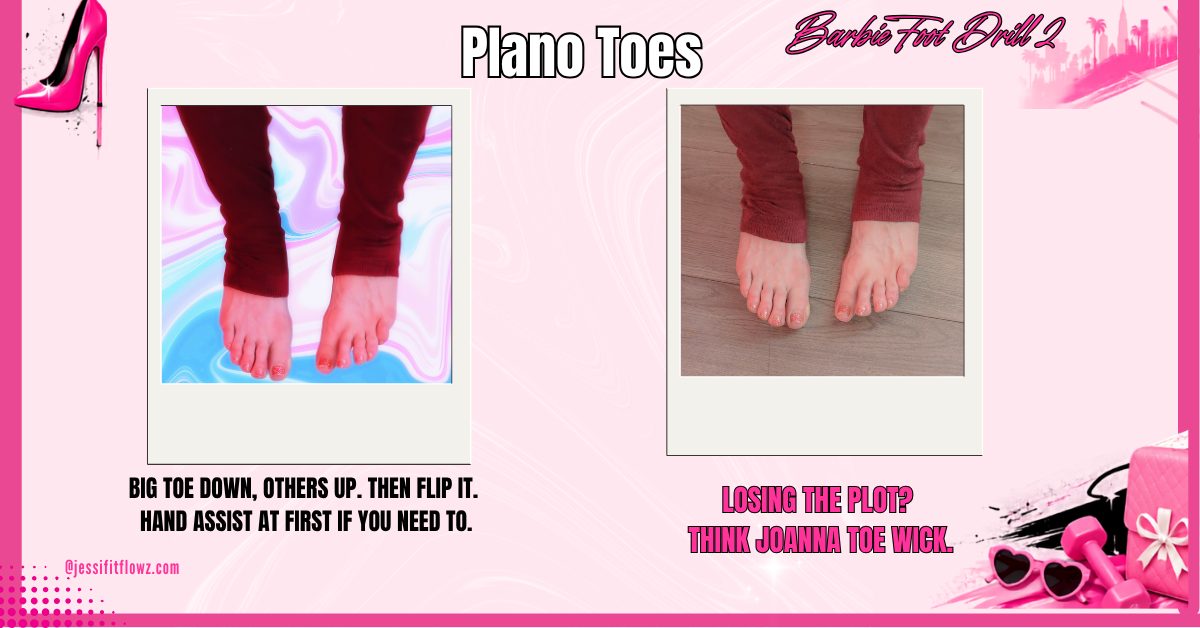
2. Piano Toes
Keep the foot grounded.
Start with:
Big toe down, other toes up.
Then switch:
Big toe up, other toes down.
This one is harder than it looks.
If you need to use your hand at first to help place the toes, do it. Then start trying to reproduce that position without the hand.
You’re teaching your brain how to find the movement.
It may initially feel like your brain has completely lost the plot. Normal.
You’re asking your toes to stop moving like one giant collective foot flop and start doing separate jobs.
Pilates is a skill practice in the same way martial arts are a skill practice. You repeat a movement until your nervous system understands the assignment. Think of yourself as Joanna Toe Wick.
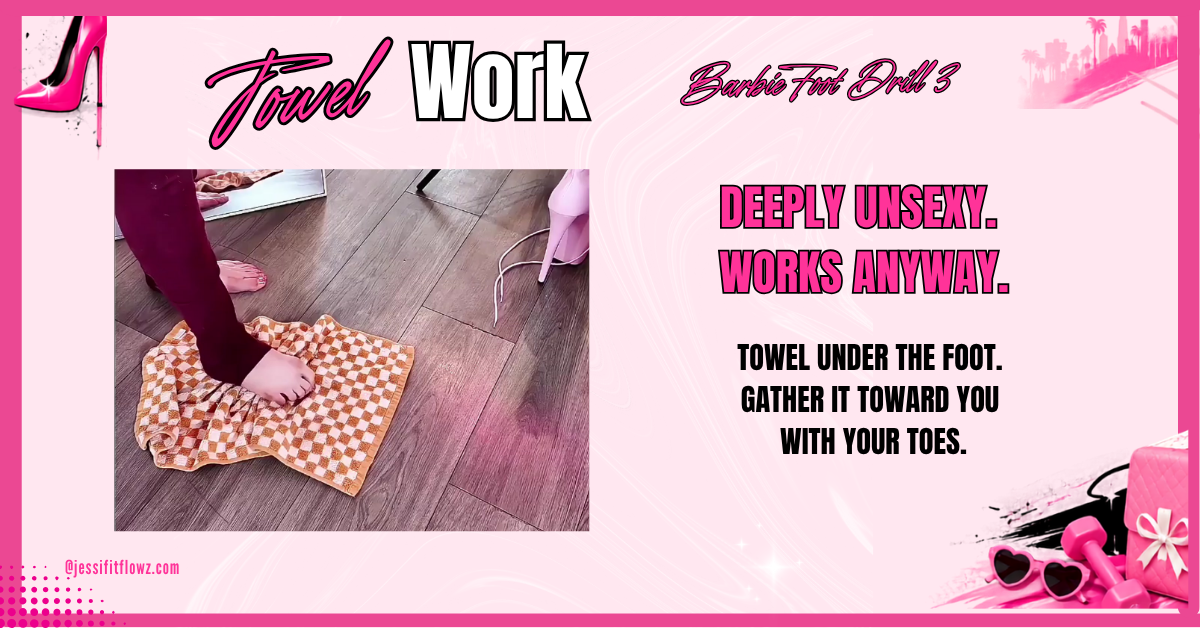
3. Towel Work
Put a small towel underneath your foot and use your toes to gather it toward you.
That’s it.
It’s not innovative. It’s not sexy. Nobody is going to launch a luxury towel-scrunch certification for $799.
It’s just a very standard foot exercise that shows up in Pilates and physical therapy because it gives your toes something active to do.
And you probably already own a towel. You do not need 45 minutes of artisanal foot rehabilitation. You just need to give your feet some movement they are not getting inside the shoe.
Your Shoes and Your Training Can Have Different Jobs
Your Pleasers do not need to provide every movement your foot will ever need. They’re shoes. They’re not curing cancer. Their job is to be stable, perform well, survive the stage, and make your legs look ridiculous in the best possible way. Your training has a different job. Your training can give your feet movement the shoe doesn’t. That’s the distinction I care about. I don’t automatically ask: Is this activity perfect for the body?
Barbie certainly doesn’t. Almost nothing a plastic doll enjoys qualifies. A much more useful question is:
What does this activity demand, and what should I train around it?
That is how I think about Pilates in real life. Not as a purity test. Not as a list of things you are supposedly never allowed to do. As training that supports the things you actually want to do.
Your Pleasers Aren’t the Villain
I’m not interested in making you afraid of shoes. I’m also not interested in pretending that wearing a highly structured platform heel is biomechanically identical to wandering around barefoot. Both positions are silly.
Wear the Pleasers. Dance in them. Pose in them. Do the cosplay. Make your legs look nine miles long.
Barbie would. And when the shoes come off, give your feet something different to do. Wear the shoes. Train the imbalance.
Want More?
Want more movement training built around the things you actually do instead of generic fitness rules?
Grab my foot and ankle training guide