My Pleasers Cracked and the Glitter Hid It: A Mary Jane Watson Heel Safety Guide
Mary Jane Watson has been standing on New York City concrete in heels since 1962.
She watches Spider-Man fight supervillains from street level…. In platforms…..On pavement……. For hours.
Mary Jane checks her shoes. You should too.
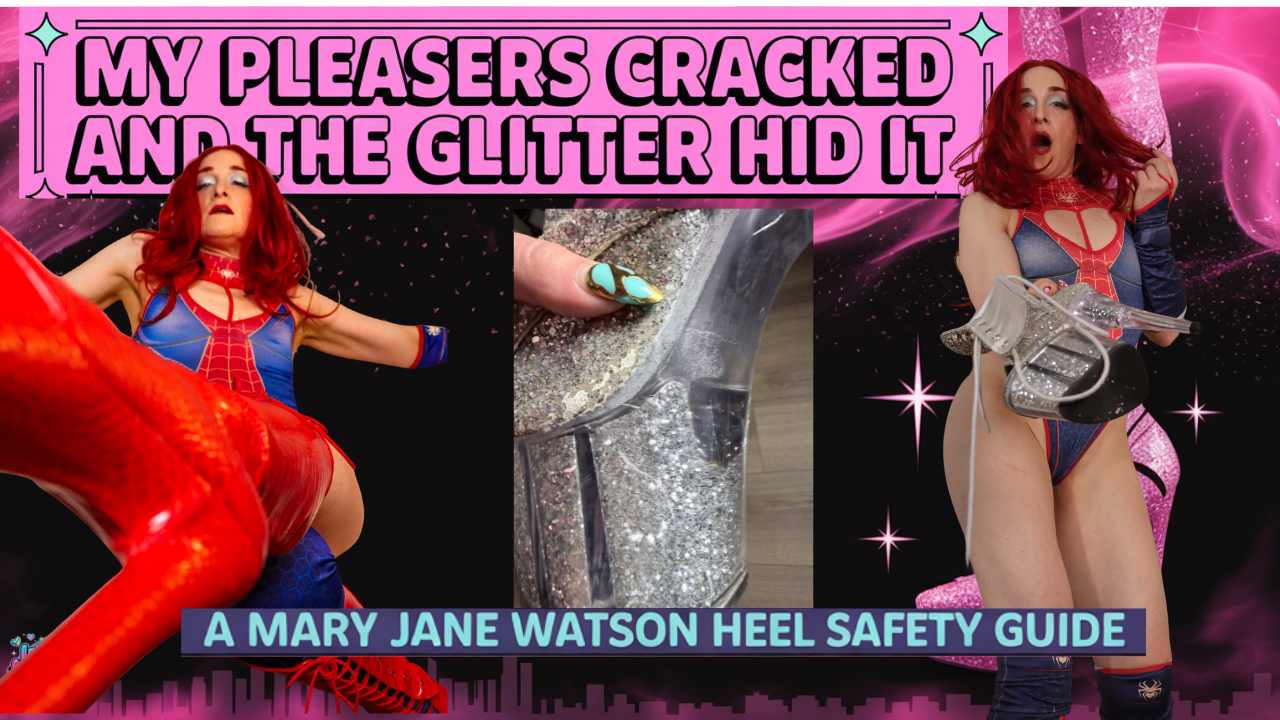
My practice pair cracked at the toe box. The glitter hid it.
I don't know how long I was walking around on a structurally compromised platform but it was long enough that I'm writing this post about it.
This is not a small thing
What a cracked toe box actually does
The platform on a Pleaser is designed to absorb impact.
Every step, every landing, every weight shift, the platform takes it so your ankle doesn't have to.
When the toe box cracks, that changes.
The platform can no longer distribute load the way it was built to. Instead of the shoe absorbing impact, your ankle, your forefoot, and your joints take it directly.
That's how you get hurt doing something you've done a hundred times.
Not from doing something wrong. From equipment failure you didn't see coming.
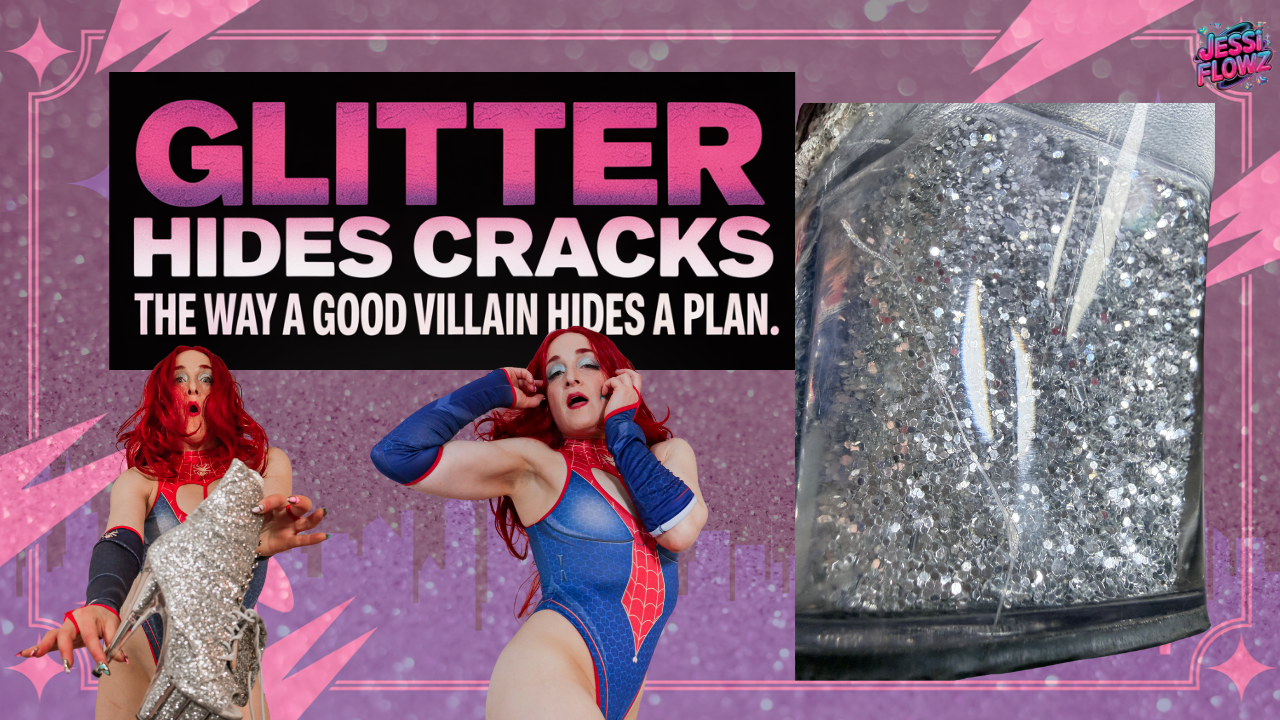
Why glitter-filled platforms are specifically deceptive
Glitter-filled Pleasers , like my pair above,with glitter sealed inside the platform, are beautiful and I will defend them until I die.
They are also the hardest style to inspect.
The glitter catches light differently depending on angle. Hairline cracks read as sparkle. Structural weakness looks like shimmer.
You have to look harder and from multiple angles to catch damage that would be immediately obvious on a clear or solid platform.
I am not saying don't buy glitter Pleasers.
I am saying inspect them like you mean it.
THIS ISN’T JUST A POLE PROBLEM
Your Platforms Don’t Care What Aesthetic You’re In
Mary Jane wore them. Strippers train in them. Goths live in them.
Cosplayers survive cons in them.
Different scenes. Same physics.
If your shoe has a platform, it’s doing one job: absorbing force so your ankle doesn’t have to When it fails, your ankle becomes the shock absorber.
That’s not edgy. That’s how you end up limping through a convention like a wounded NPC
Why your practice pair is the most dangerous pair you own
Your good heels — the ones you wear to cons, shoots, and performances — get inspected constantly. You look at them.
You photograph them. You notice when something looks off.
Your practice pair? You pull them out, put them on, and go. You've worn them so many times they feel like an extension of your body. You stop seeing them.
Practice pairs take more abuse than performance pairs. Floor work, repeated ankle loading, training on surfaces that weren't designed for heels. And they get the least scrutiny. That combination is how you end up training on a cracked platform for months.
The floor situation
Bad studio floors accelerate wear in ways you won't notice until it's too late. Rough, unfinished, or textured floors create micro-abrasions on the platform surface every time you move. Over time those abrasions become weak points. Add repeated impact loading and you have a crack waiting to happen.
If the studio floor feels rough or gritty under your heels — that's a problem worth noting.
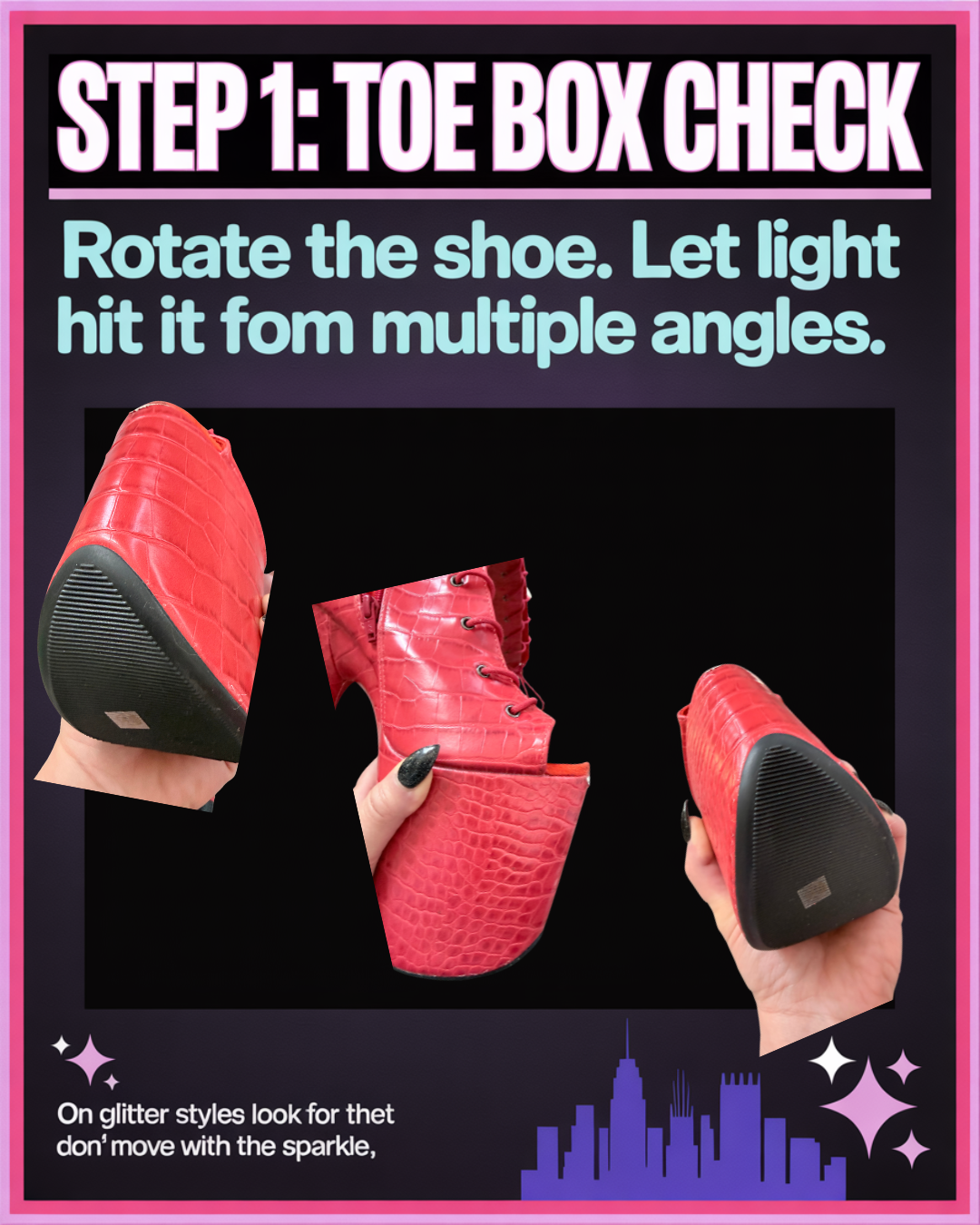
How to actually inspect your heels — do this every time
1. Toe box check
Look at the front of the platform from multiple angles. Rotate the shoe. Let light hit it differently. On glitter styles — look for
lines in the glitter that don't move with the sparkle. That's a crack.
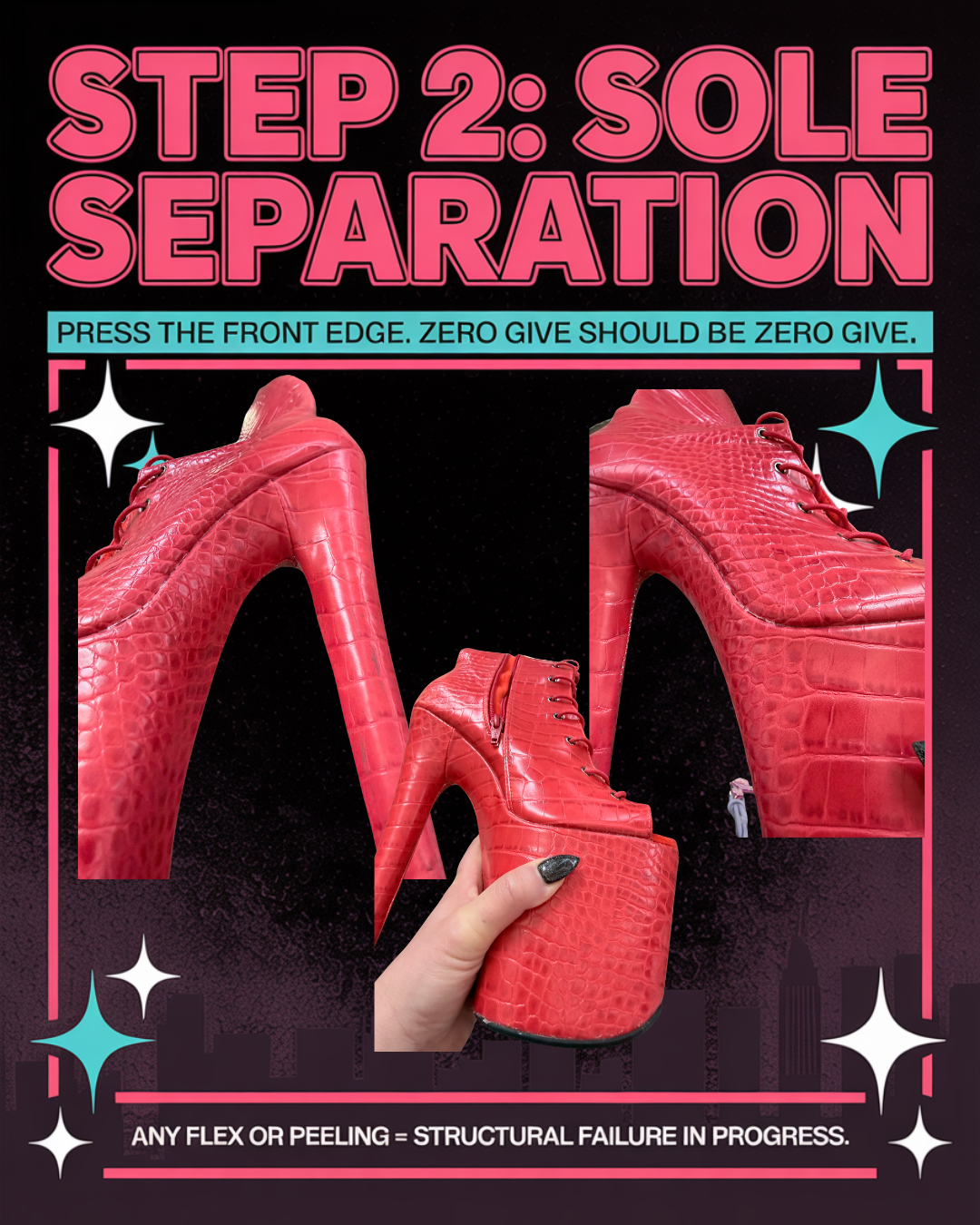
2. Sole separation
Press firmly along the front edge where the sole meets the platform. There should be zero give. Any flex or peeling means
the sole is starting to separate.
3. Platform integrity
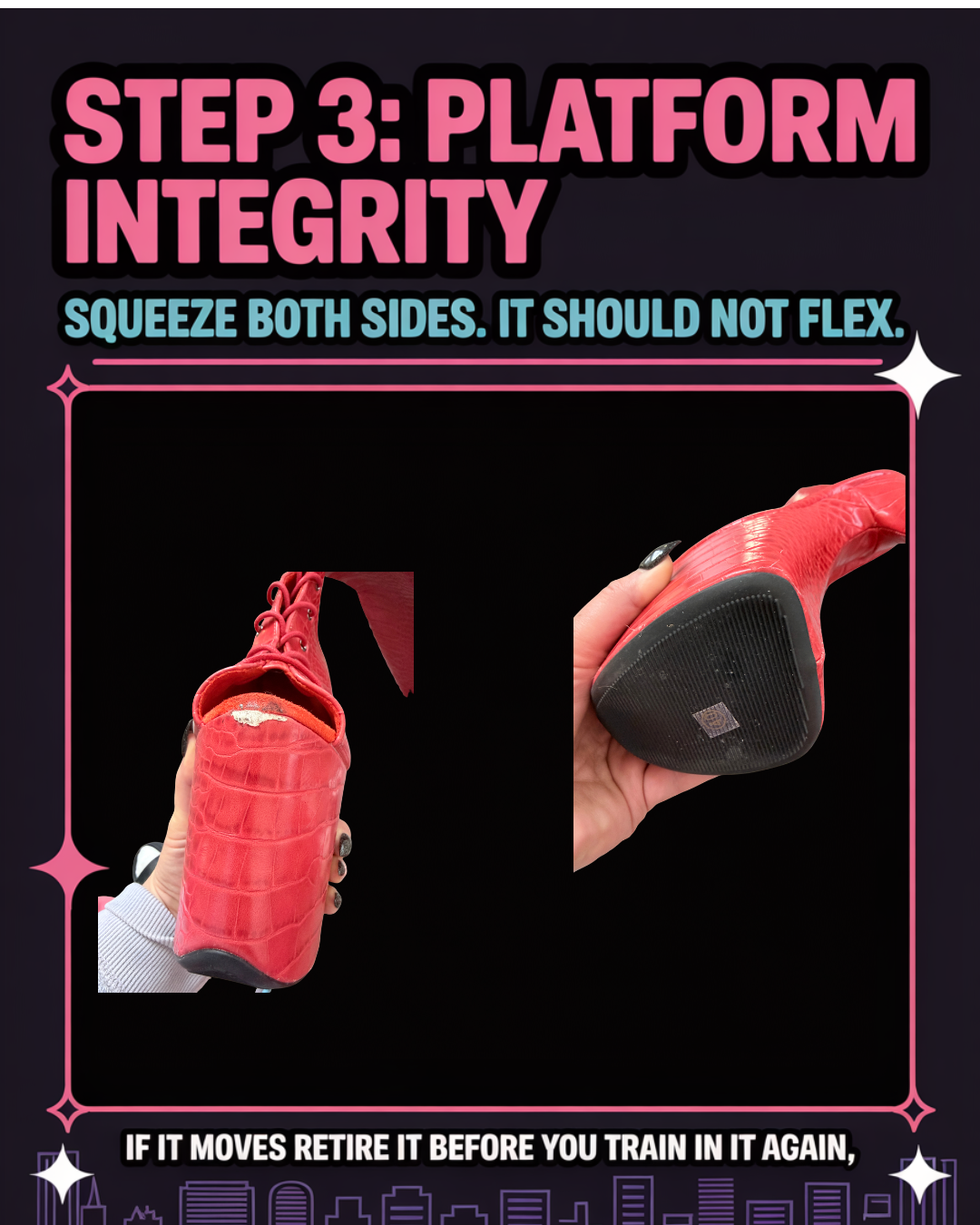
Squeeze both sides of the platform firmly. A healthy platform is rigid. If it flexes or you hear any sound — retire the shoe or
get it repaired before training in it again.
4. Strap and ankle hardware
Pull each strap. Check where they attach to the shoe body. Strap failure mid-movement is a direct ankle injury risk.
Pole heels fail one way. Goth boots fail another.
🕷️ For Pleasers / Dance Heels
toe box cracking
clear plastic stress fractures
sole separation from floor work
🕷️ For Goth Boots (Demonia, etc.)
platform detaching from upper (glue failure)
internal foam compression → feels “fine” but loses support
tilted wear (one side collapses slightly)
🕷️ For FESTIVAL & Convention Wear (all styles)
heat damage (cars, storage)
long-wear fatigue as materials soften over time
“they still look good” syndrome
The rule: treat your heels like equipment.
Because they are.
Check your practice pairs.
Check your con boots.
Check the ones you think are “fine.”
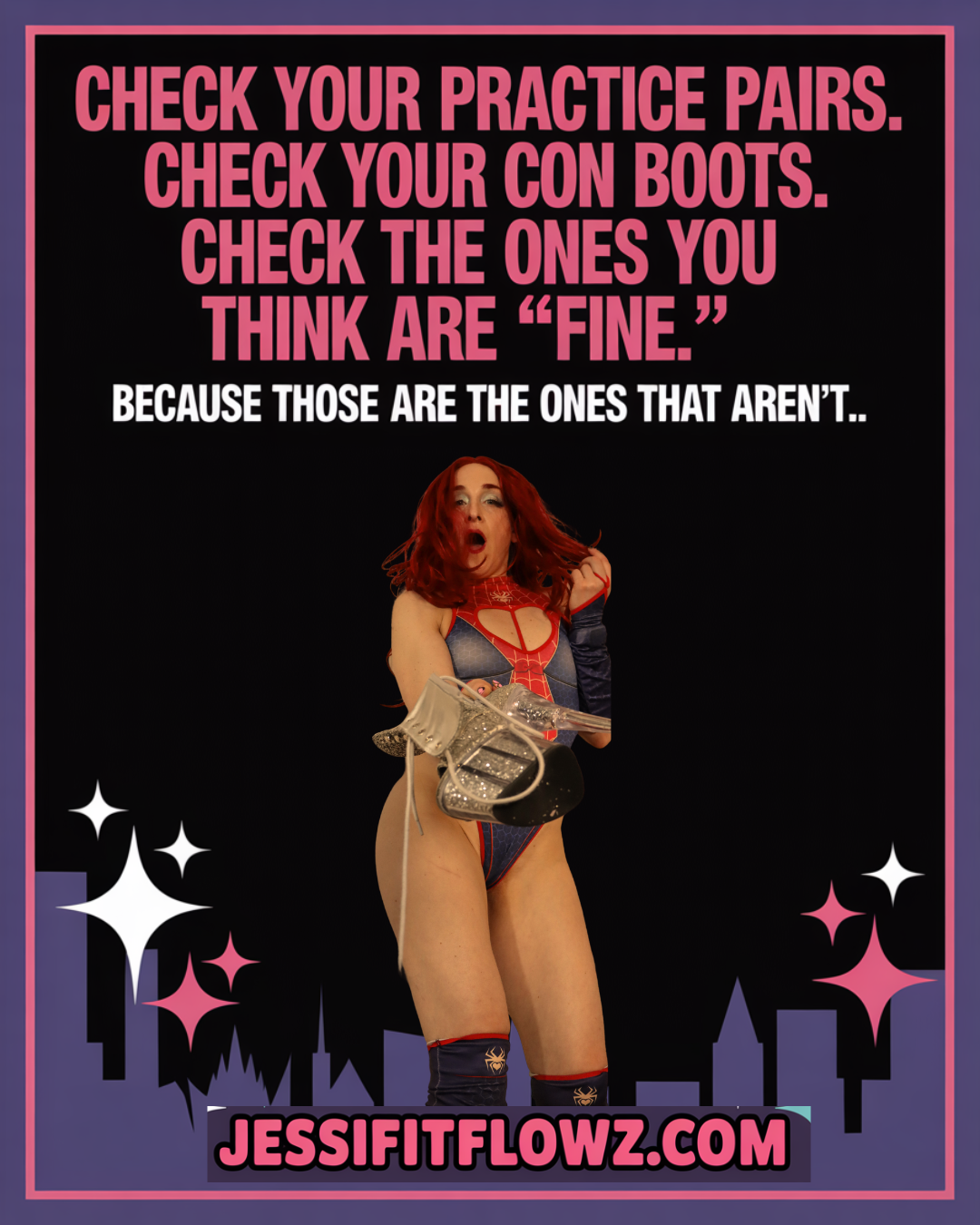
Because those are the ones that aren’t.
If your foundation needs work before you even think about the heels — the foot prep guide is in the shop.
$9.99.
