PART 2 | UPPER-BACK STRENGTH
Pretty girl posture
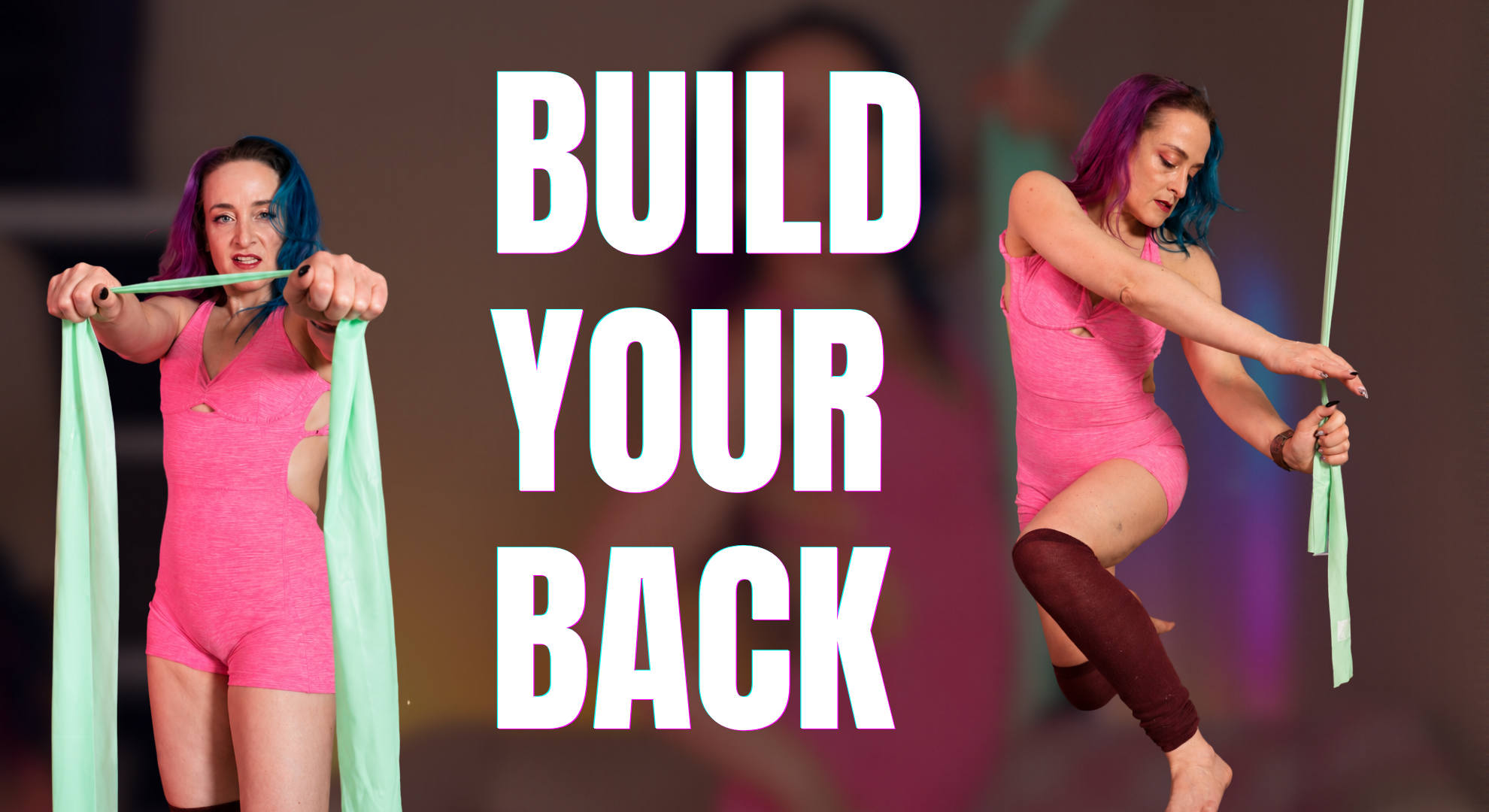
You know that moment when you catch yourself slouching? You immediately sit up straight. Pull your shoulders back. Lift your chest.
Maybe tuck your chin because someone told you that your head was falling off your spine. Great. You've corrected your posture.
Then you get distracted, return to whatever you were doing, and your body settles into another position. And the cycle begins again.
What if we stopped treating posture like something you have to remember and started treating it like something you can train?
Because spending your entire day reminding yourself to sit up straight isn't a particularly effective strength program.
It's just another thing on your already ridiculous to-do list.
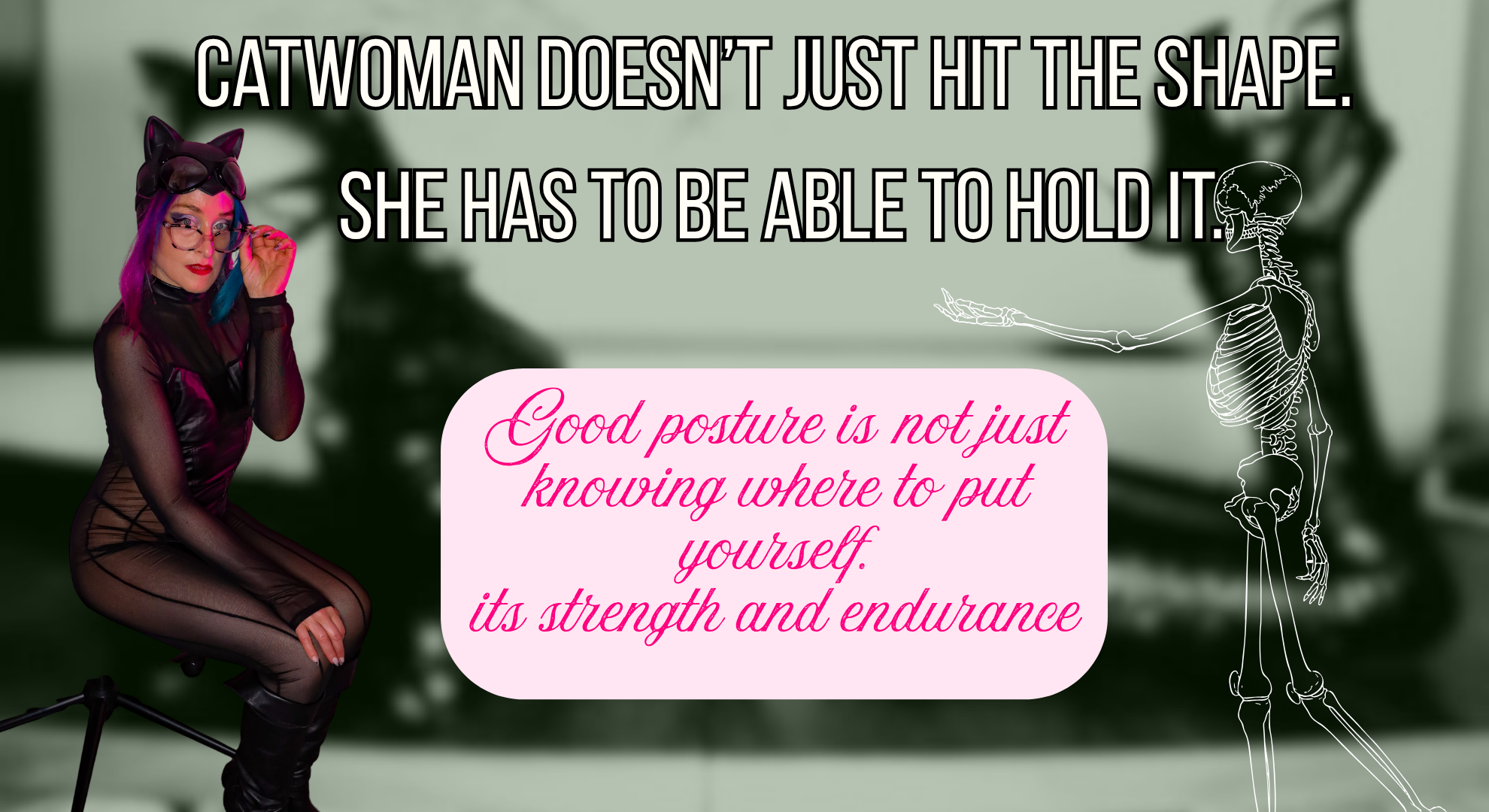
Catwoman Didn't Build That Upper Back With Affirmations

Catwoman spends an unreasonable amount of time climbing buildings, pulling herself over ledges and hanging from things she probably shouldn't be hanging from.
Climbing requires upper-body strength. Pulling requires coordination between the arms, shoulder blades and trunk. Controlling your body against gravity requires strength and endurance. Nobody is hanging off a rooftop thinking, "Shoulders back and down, Selina."
Well, they might be. But it would be a terrible time to start…. The ability to move your shoulders is only part of the equation.
You also need enough strength to control that movement under load….
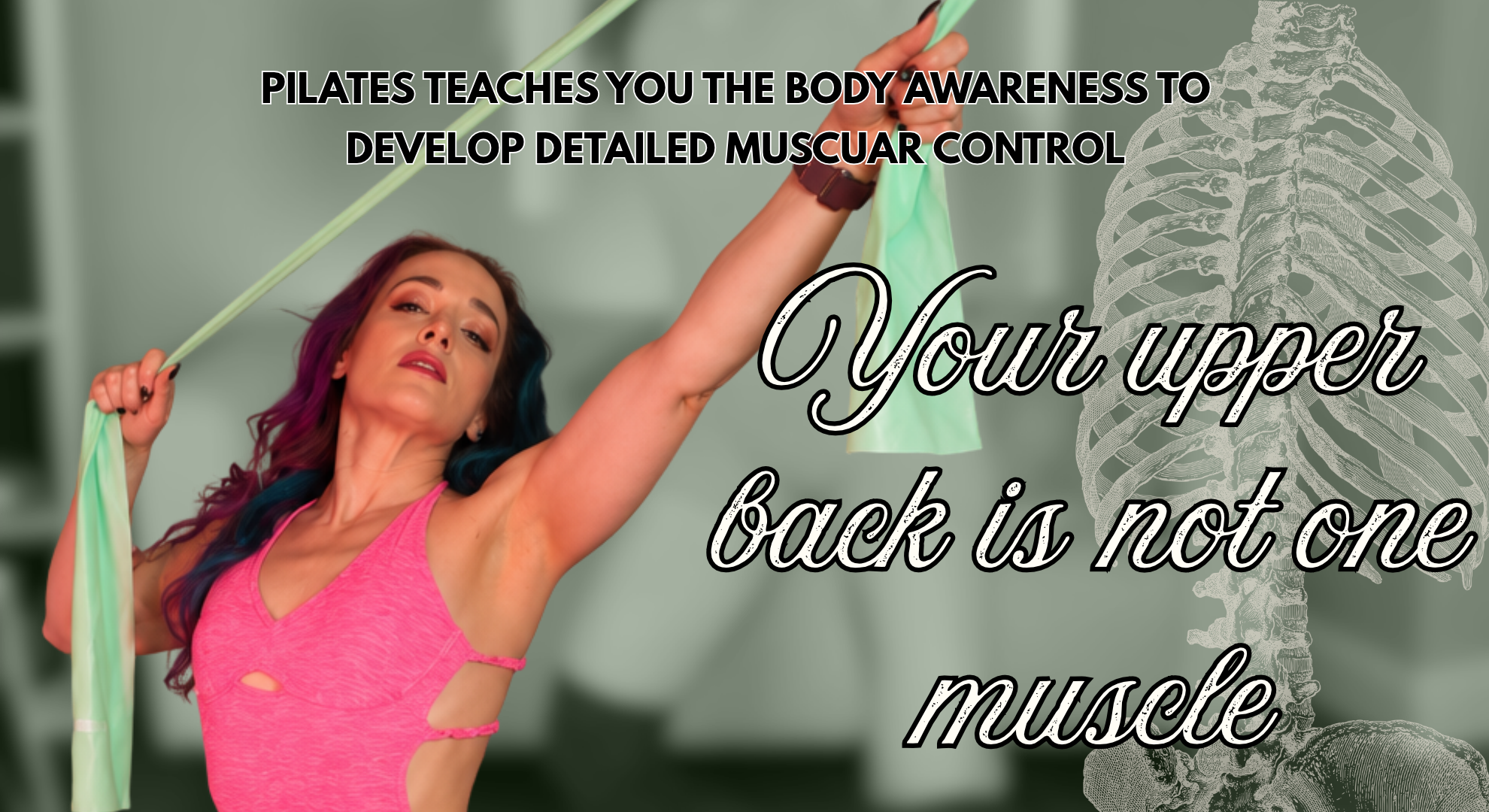
Your Upper Back Is Not One Muscle
When people say they want to strengthen their upper back, they're describing a region, not a single muscle.
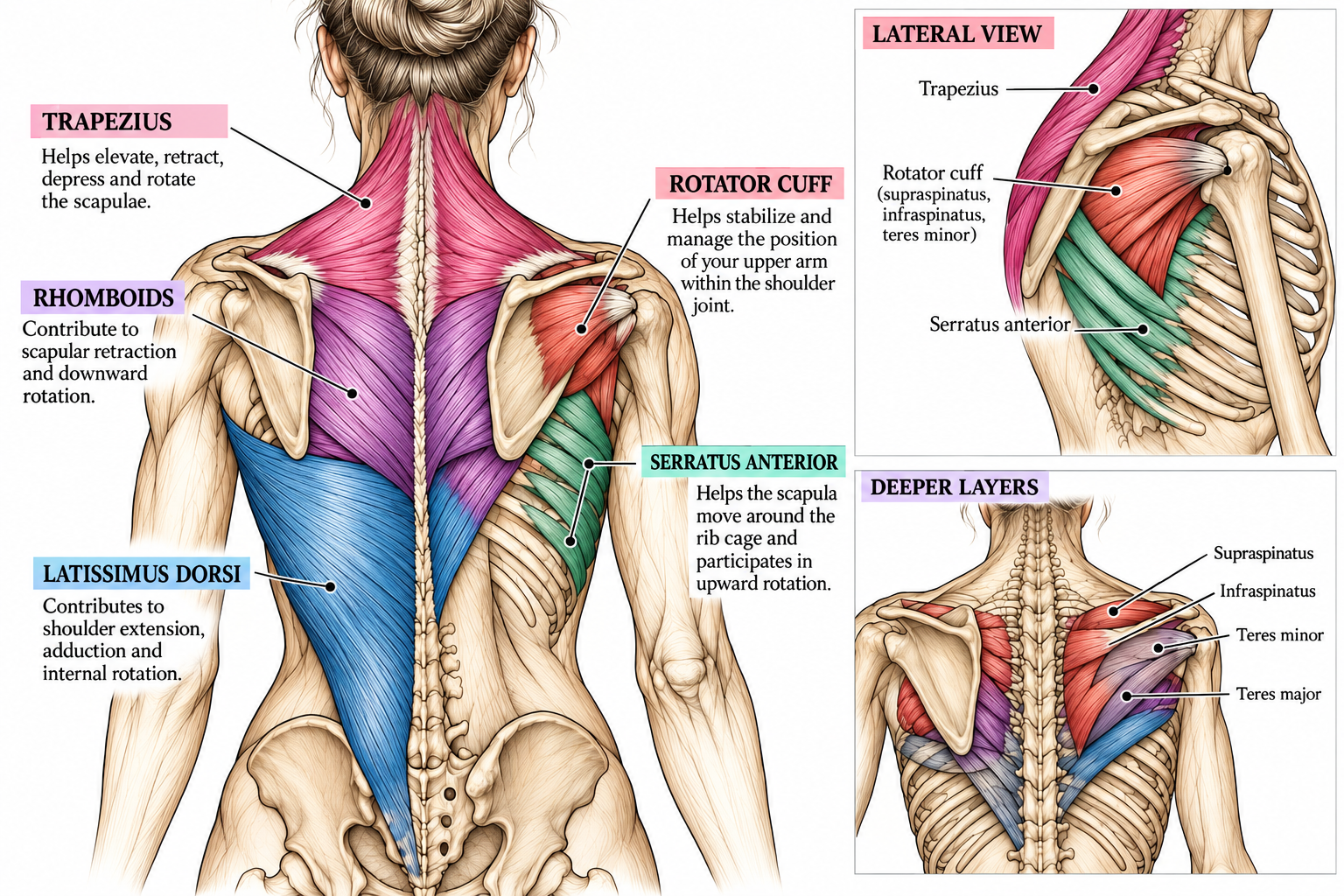
Several muscles work together to move and stabilize your shoulder complex.
Trapezius: Helps elevate, retract, depress and rotate your scapulae.
Rhomboids: Contribute to scapular retraction and downward rotation.
Serratus anterior: Helps your shoulder blades move around the rib cage and participates in upward rotation.
Rotator cuff: Helps manage the position of your upper arm within the shoulder joint.
Latissimus dorsi: Contributes to shoulder extension, adduction and internal rotation.
Different exercises emphasize different muscles and movement patterns. We need to reach. We're going to pull. And probably to rotate.
And we're going to control both directions.
Can We Talk About the Serratus Anterior?
Because this muscle deserves better publicity. The serratus anterior sits along the side of your rib cage, underneath your scapula. It's an important part of the system that allows your shoulder blade to move around your ribs. When you push something away, reach forward or raise your arm overhead, your serratus participates.
And yet, in the endless world of "posture correction," people are still being told that protraction is something to avoid. Lifting your shoulders is not a bad thing
Protraction is a normal, useful movement.
And training the muscles that help produce and control it is part of building a capable shoulder complex. That's why our resistance-band workout includes serratus reaching work. Not everything needs to be a row.
Stop Pre-Squeezing Your Shoulder Blades
People are often told to squeeze their shoulder blades together before beginning a row. And then keep them squeezed through the entire exercise…..if you've already pulled your scapulae all the way back, where exactly are they supposed to go?
In many rowing variations, it's useful to allow the shoulder blades to move naturally as the arms reach forward and pull back. That means permitting controlled protraction during the reach and retraction during the pull. Your scapulae are part of the exercise. Not passive spectators being held in place while your elbows do all the work.
Train movement, not just positions.
Strength Is More Than Moving Something Heavy
When we're talking about posture-related training, muscular endurance also matters. Your upper back needs to tolerate repeated activity. Your shoulders need to manage reaching and pulling. And your trunk needs to coordinate with those movements.
Your strength and endurance should support a wide range of activities without making every position feel like an enormous effort.
Resistance bands are useful here because they allow us to apply load through several different movement patterns. We can challenge the shoulder complex without requiring a full gym.
Train It: Pretty Girl Posture Part 2
In Pretty Girl Posture Part 2: Long Band Upper Back + Shoulders, we're taking the movements introduced in Part 1 and adding resistance.
This 20-minute workout uses one long resistance band.
We start with shoulder preparation and controlled movement before progressing into:
Serratus reaching work
Straight-arm pulldowns
Rows and high rows
External rotation
Pull-aparts
The goal is to build upper-back and shoulder strength while allowing the scapulae to participate.
We're not trying to freeze your shoulders into the world's most aggressively upright posture. We're training the muscles that help you move.
Coming Next: Open It. Then Support It.
Now that we've worked on movement and resistance, we're heading to the thoracic spine.
In Part 3, we're using a yoga block for thoracic extension before asking the muscles of the upper back to do some actual work.
