Stop Holding Your Shoulders Hostage: Your Shoulder Blades Were Born to Move
Your Shoulder Blades Aren't Decorative. Let Them Move.
Somewhere along the way, the fitness industry decided that good posture meant pulling your shoulders back and down.
Forever. Apparently, we're all supposed to walk around looking like we're posing for a Victorian family portrait.
Shoulders back. Chest lifted. Chin tucked. Don't move. And definitely don't slouch, because apparently that's a personality defect now.
Your shoulder blades are supposed to move.
They're not decorative coat hangers attached to your rib cage. They're part of a complicated, beautiful system that allows you to reach, push, pull, climb, crawl and generally function as a human being. Or, if you're Catwoman, break into a heavily guarded building without setting off the alarms.

Catwoman Would Never Survive the Posture Police
Think about how Catwoman moves. She's reaching overhead, crawling across rooftops, rotating through her upper body and pulling herself over ledges.
Imagine trying to do all that while keeping your shoulder blades permanently squeezed together.
The entire point of having movable shoulder blades is that they can change position as your arms and torso move….. Instagram posture corrections and somebody's Pilates teacher from 1997, we decided the answer was to squeeze everything tight
That's not posture training. That's a hostage situation.
Meet Your Scapulae
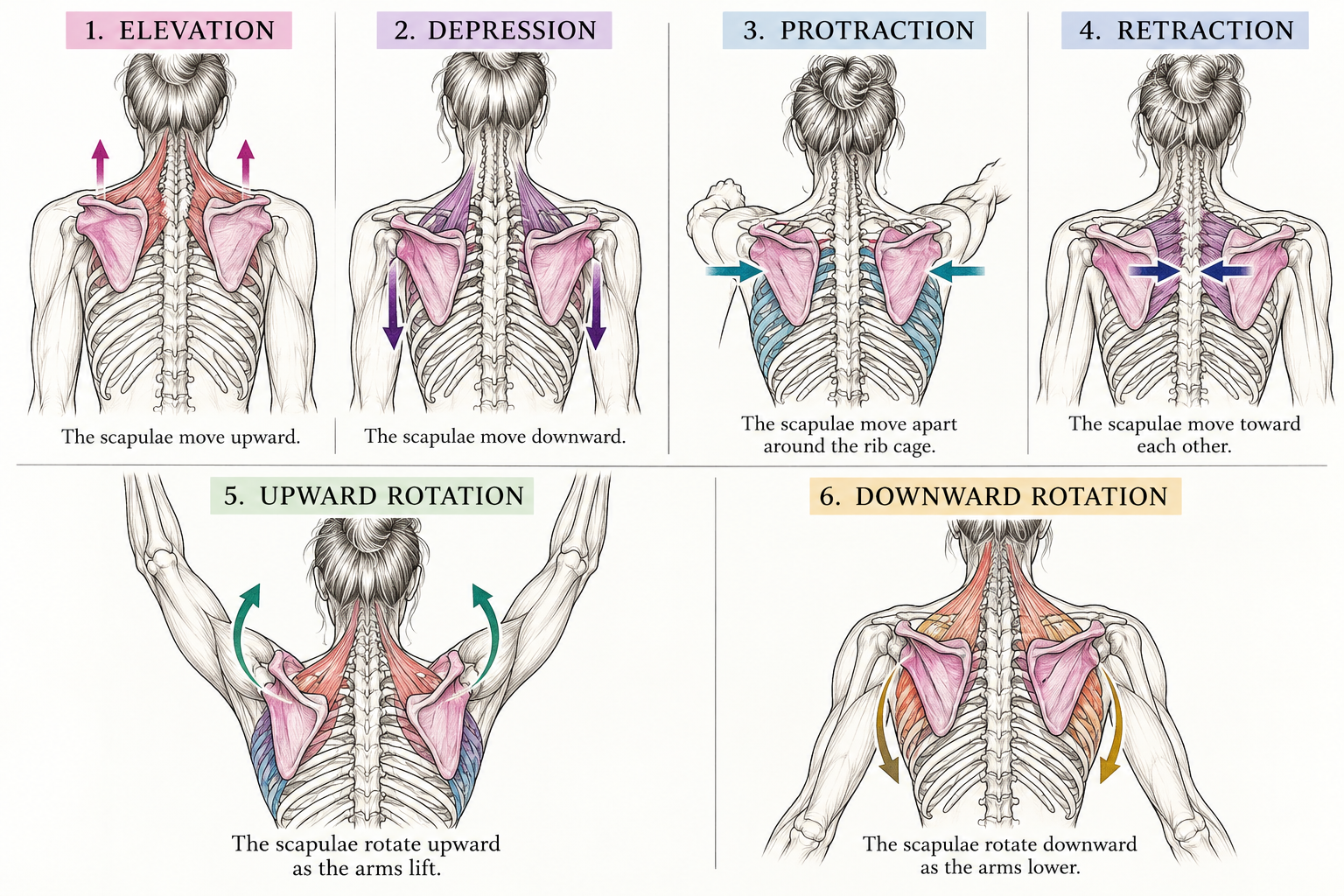
Your scapulae are your shoulder blades. They're triangular bones that sit along the back of your rib cage, connected to your arms through the shoulder complex. and they glide along the rib cage through a coordinated system of muscles. THEY ARE BUSY THINGS= they are responsible for
Elevation and depression: Your shoulder blades move up and down.
Protraction and retraction: They move apart and toward each other.
Upward and downward rotation: They rotate as your arms move.
They also tilt and adjust their position as part of normal shoulder mechanics. Every time you reach overhead, your scapulae participate. Every time you push something away, they move around your rib cage. Every time you row, pull or reach forward, they change position.
The Problem With "Back and Down"
There's nothing inherently wrong with bringing your shoulders back and down. Sometimes that's exactly what an exercise requires.
The problem is treating one position as the correct position for every activity. Your shoulder blades need to rotate upward when you reach overhead. They need to protract when you reach forward.
If you're constantly trying to prevent those movements, you're interfering with the very mechanics you're supposed to be improving.
Shoulder Mobility vs. Scapular Control
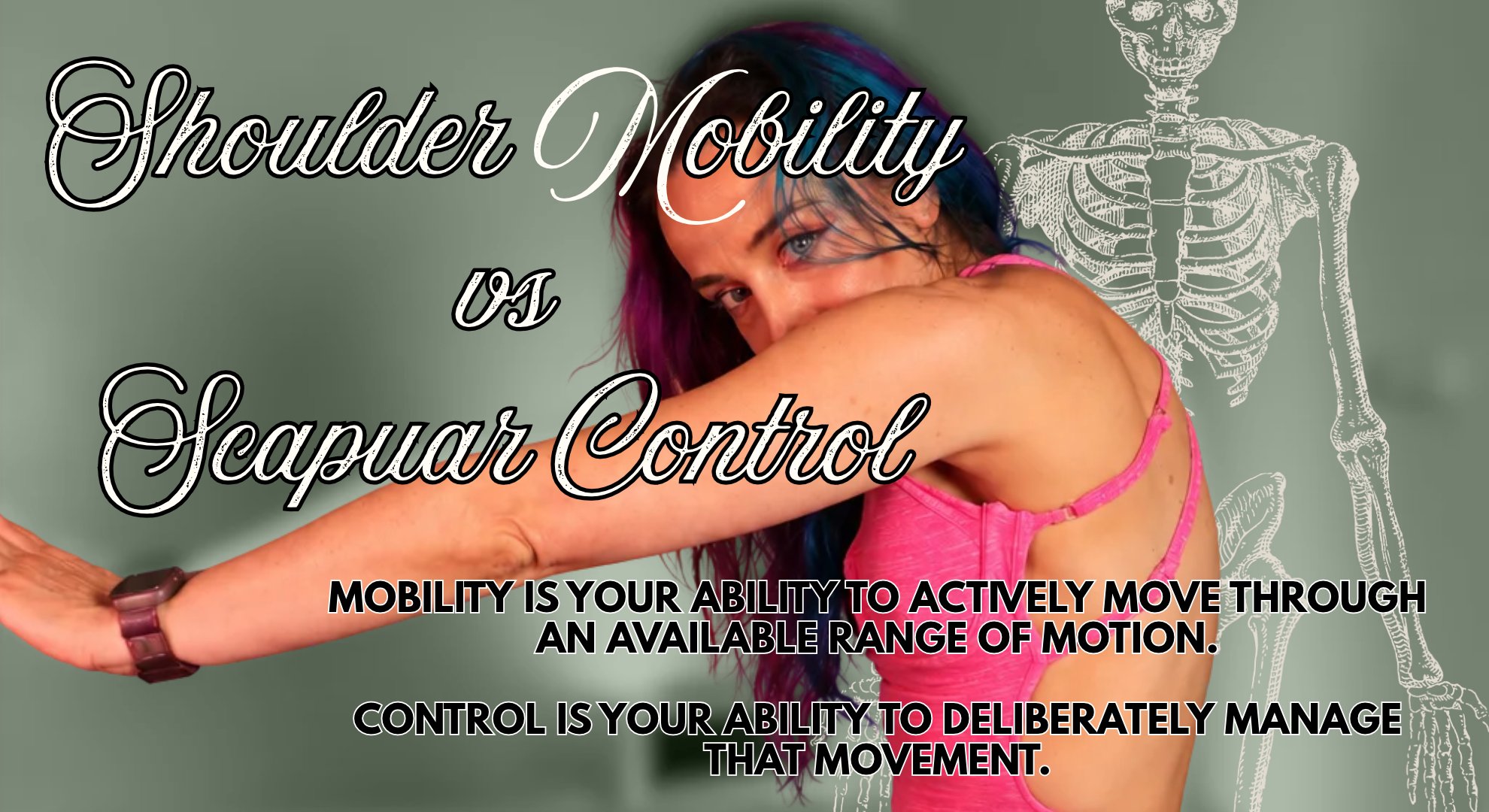
Mobility is your ability to actively move through an available range of motion.
Control is your ability to deliberately manage that movement.
You might have plenty of shoulder range but struggle to move your scapulae independently. Or you might have decent scapular control but limited shoulder motion . Neither problem is solved by aggressively reminding yourself to sit up straight. That's where controlled articular rotations, or CARs, become useful. A shoulder CAR takes your shoulder through a slow, deliberate rotation.
The point isn't to make the biggest circle humanly possible. It's to explore your available range while limiting unnecessary movement elsewhere.
Scapular isolations work similarly. Can you elevate your shoulder blades without throwing your entire rib cage backward? Can you protract without collapsing through your spine? Can you retract without jamming everything together?
Your Rib Cage Is Part of the Conversation
Your shoulders don't operate in isolation. Your thoracic spine and rib cage influence how your shoulder blades move.
If you rotate through your upper back, your scapulae change their relationship to your torso. If you reach overhead, your thoracic spine may extend as part of the movement. If you spend most of your day in a limited range of positions, you might simply benefit from exploring some different ones.
You do not need to spend eight hours sitting perfectly to undo eight hours of sitting.
You need movement……movement you're capable of controlling.
Train It: Pretty Girl Posture Part 1
That's exactly what we're doing in the first workout of my four-part Pretty Girl Posture series.
Part 1: Shoulder Mobility + Scapular Control
This is a 15-minute, equipment-free workout exploring how the shoulders, shoulder blades and upper back move together. We work through shoulder circles and CARs, scapular isolations, elevation and depression, protraction and retraction, wall slides, thoracic rotation and scapular push-ups.
And yes, we're going to let your shoulder blades move. The goal isn't to force your shoulders into one perfect resting position. It's to give you more positions you control to move between them.
Because Catwoman doesn't spend her evenings worrying about whether her shoulders are properly retracted.She's got rooftops to conquer.
[WATCH PRETTY GIRL POSTURE PART 1: SHOULDER MOBILITY + SCAPULAR CONTROL →]
Coming Next: Strength Behind the Movement
In Part 2, we're grabbing a long resistance band and building the upper-back and shoulder strength to go with all that newfound freedom.
Because mobility is cute. But strength is how you pull yourself onto the rooftop.
